"Sometimes you just have to take the leap, and build your wings on the way down!"
Nature Pedagogy: Through the lens of an Educator
By Lexie Biegun
By Lexie Biegun
 I am just one of hundreds of early childhood educators cross BC who are trying to wrap our heads around the word reconciliation and what it means for our centres and to the children who feel safe here.
Firstly, I want to acknowledge that Lexie's Little Bears Child Care is on the uncited territory of the Lekwunken First Peoples. It is important to me that the educators, families and guests who come here, know this. I recently attended a wonderful and very thought provoking workshop at the West Shore CCRR, lead by a speaker from the BC Aboriginal Child Care Society. She did an amazing job of explaining the language we use to welcome and identify our Indigenous community. In order for us to be successful with our communication, it is important for us to use the correct names. For example, the word Indigenous is used globally and is usually considered to be politically correct. The most important thing is to address another human with kindness and respect. If this human would like to be acknowledged under a different name, they may tell you. First Nations in British Columbia refers to the 103 Nations we have here in BC. First peoples is very similar to Indigenous, and is usually politically correct if said with respect and kindness. Aboriginal means land based. (Belonging to a nation) However some humans do not like the use of this term because of the prefix (Ab) meaning "not original" It is important to ask or the other human may tell you their preference. The Metis have specific European heritage, where their community vouches for each member. And the Inuit are from the Northern Parts of Canada. The Inuit are homogeneous, speaking the same language and of the same culture. In British Columbia alone, we have 203 different Indigenous languages and there are 600 Indigenous languages across Canada! The indigenous community is the largest growing sector of the population, with many young parents and many large families. There are 1.67 million individuals who identify as First nations, Metis or Inuit, which is 4.9% of the population in Canada. So, the common thread at this workshop was that most of the educators who were there did not have any indigenous children in their child care programs.(even though we welcome all children and all cultures) The educators who did have Indigenous children, did so for shorter periods of time as the children were usually introduced by Foster care programs. So where are all the children? This is the heart breaking part that we are all struggling and grappling with daily. The reality is that many of our indigenous community members do not trust the education system, and therefore they do not trust our centres to be a safe and welcoming place for them or their children. For approximately 113 years, Residential schools ran all across Canada. The last one closed in 1996... This is our past, and we are committed to acknowledging our past and moving forward with our best intentions to make all children, families and communities feel welcome in our child care centres. It is our time to be kind, to be gentle and to allow time to slowly heal. It is an honor to work with ALL children. I will do my part as best I can. Lexie
2 Comments
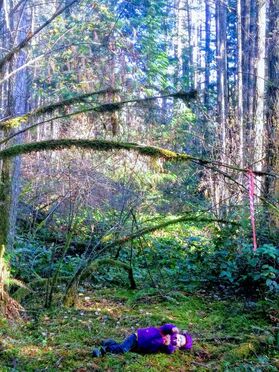 I feel as though 2020 has opened my eyes to some of life's more simple pleasures, ones I have always practiced but never truly appreciated to this extent. The simple art of napping outside.... breathing in the fresh forest air! How lovely, how pure and how very simple (yet totally perplexing to some) this daily rhythm has become. Imagine a large childcare facility located in the forest of Victoria, BC taking on this task. Years ago, back when I ran a small home-based business from my home, this was a hot- topic of discussion amongst parents! In the warmer months I would set up the sleep mats all around the back yard and I would let the children sleep outdoors. Fast forward to today, where I have designed and built a sleep shelter... ( The Slumber Lodge) to allow for 16 children to nap all year long! Rain or shine, hail, sleet, snow or wind, we now have a safe and sound structure for children to sleep in. It is not as simple as it may seem to organize and settle 8 to 16 children into a deep slumber. The educators have worked with many variances throughout the last few years navigating their way through bumps and hiccups in the road. One of the funniest realities at nap time is that nature can be really noisy! Tired little eyes will shoot open with a loud caw from a curious crow or a cheeky little squirrel making its way up a tree with a load of seeds in its mouth. It can also be extremely distracting when you are trying to sleep! One educator told me a story about two birds in the spring (mating season) that were inside the Slumber lodge calling back and forth to each other in the rafters of the ceiling. She said it was so loud she couldn't believe all the children didn't wake up! ( sometimes these things just work themselves out!) The educators found that the lull of soft, sleep music does help the children focus and slow down their thoughts. For this reason, the Slumber Lodge has power and fairy lights built in so they can plug in their phones and speakers for music and their computers for documentation. Another hurdle was that its light outside in the afternoons! When we put children down for a nap indoors, we often have the room completely dark with sleep blinds and heavy curtains stopping any sliver of light to pass through. When you nap outdoors, there are no sleep blinds and there are no curtains. In fact, sometimes that sunshine might be streaming straight into your eyes! For these reasons, we thought an outdoor structure that was solid, had walls and a roof and a cement floor would suit best for all weather and all seasons. They are on cots which keep them warm and off of the hard floor, and the educators have low seating chairs (beach chairs) that allow them to move around and rub backs when needed. Proper sleeping bags or sleep sacks would be needed for the cooler months when the rains are relentless and the snow covers the ground. On the West Coast of Vancouver Island, we see a lot of inclement weather! Our winters are relatively mild compared to the rest of Canada , but they can be equally ruthless. An outdoor washroom was also constructed in close proximity to the Slumber Lodge to allow any one to be within sight incase "nature-calls". Lastly, while working closely with my (talented) Infant/toddler educators, we designed a cubby/storage and changing area that would allow the children to be comfortably changed outdoors rather then having to go inside. A boot rack and hooks were also installed for their shoes and jackets. Essentially, the Slumber Lodge has become an outdoor classroom where both the educators and children can access everything they need for the day without having to go indoors. This is where we insert COVID 19, and all that it has changed in our worlds... We have learned so much since March 2020. I have written, re-written, changed and implemented more policies and procedures this year then in the 25 years I have been an educator! We have all been in different stages of fear for different reasons and for different lengths of time and we are all just holding on and doing our best given the circumstances we are in. One of the greatest gifts that having an outdoor program has given us throughout the pandemic is the gift of space. We are on 4 acres of forest land, and we can distance ourselves in a way that many childcare centres cannot. The educators are able to come to work and feel safe. This means everything. No one saw this pandemic coming, and we certainly had no idea it would still be going on past Christmas, but here we are. Policies and procedures have been implemented and families have been incredibly resilient over the past 10 months... and we have endured. Outdoor programming, sleeping in the forest, bringing materials outside, distancing ourselves throughout the property, eating outdoors, and an outdoor washroom where we play are just some of the ways we are getting through this pandemic together. Children are incredibly resilient, even more so than many of us give them credit for. We will one day look back at 2020 and reflect on all the LIFE that this year brought us. Hopefully, with a little luck, our children at Little Bears won't recall the extra handwashing, sanitization methods or perimeters we set. Hopefully they will just feel that they have been safe, a sense of love and kindness from everyone around them and "knowing" that they spent their time outside, in nature with the trees swaying and the crows cawing, and taking their long winters naps outdoors, snuggled up with their blankets and sleep sacks listening to the rain on the tin roof. I am thankful for nature and to be working with the most extraordinary educators through these uncertain times. We will eventually unpack all of our thoughts on 2020. But, today I will sit by the fire with my tea in reflection, and I am so thankful to be living here on Vancouver Island where I too feel safe... "The human capacity for burden is like bamboo-far more flexible than you'd ever believe at first glance." Jodi Picoult, My sisters Keeper.. Thank you for reading. Stay safe out there! Lexie 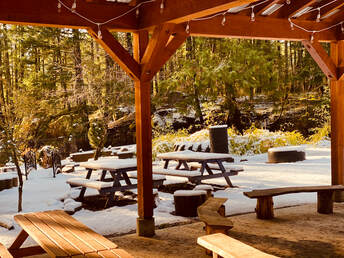 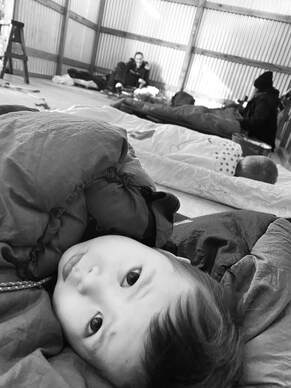 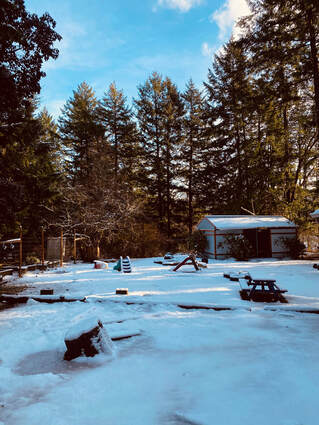 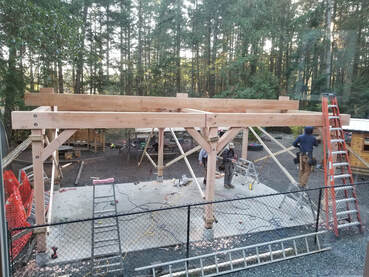 Well, after two months of holding in one of the biggest secrets of my career, I can finally share some photos. This experience has been incredibly surreal from the moment Chris called me and told me that I had won this award.   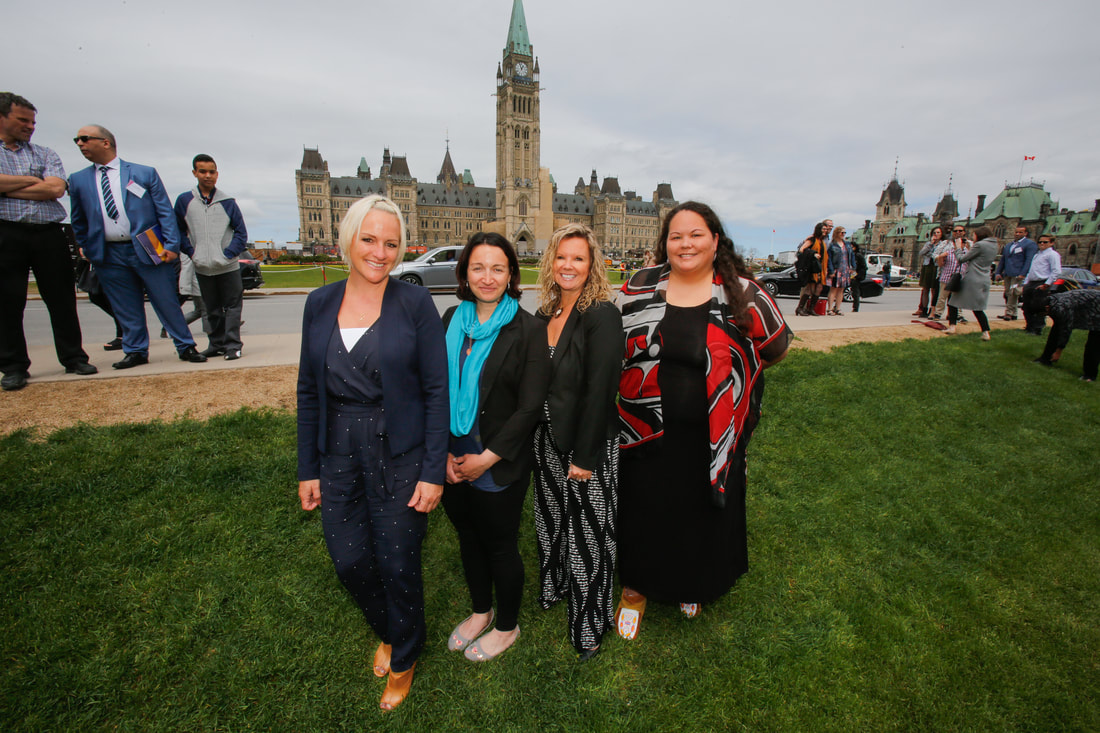 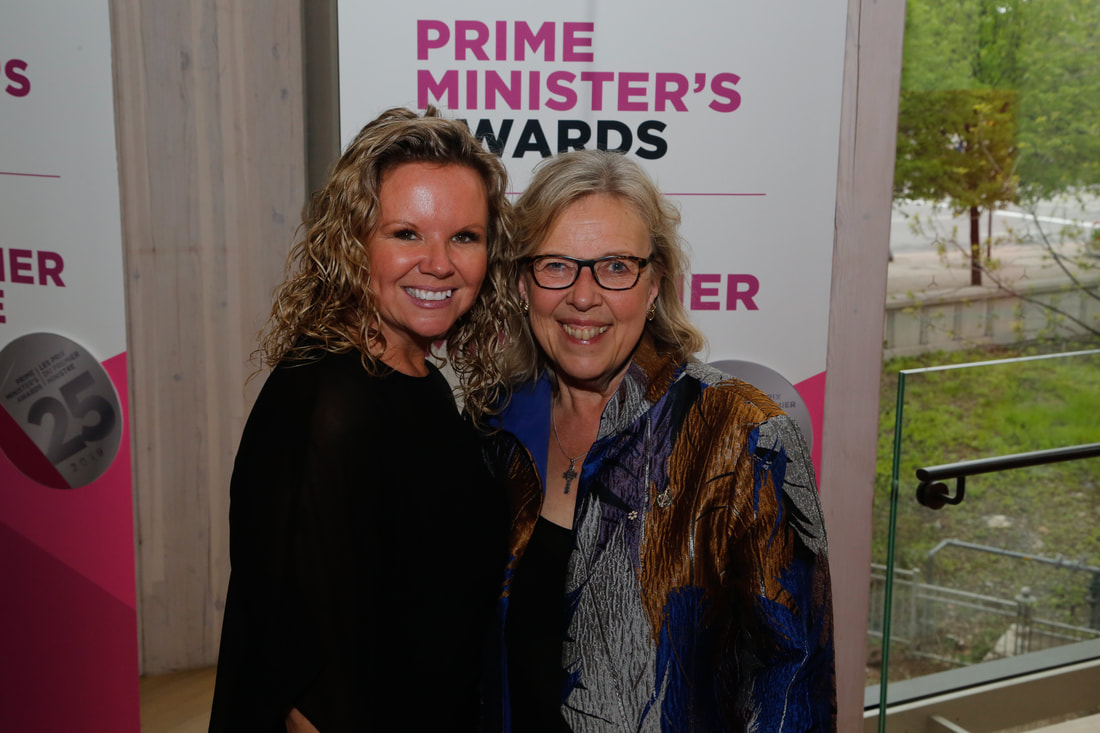 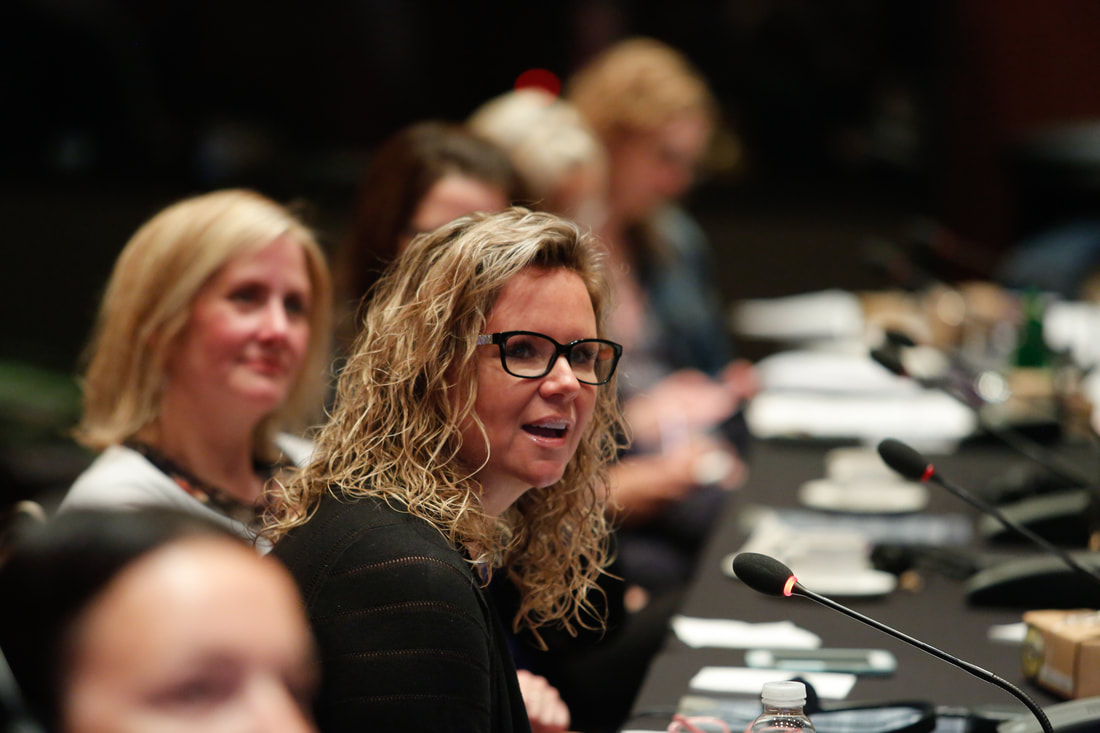 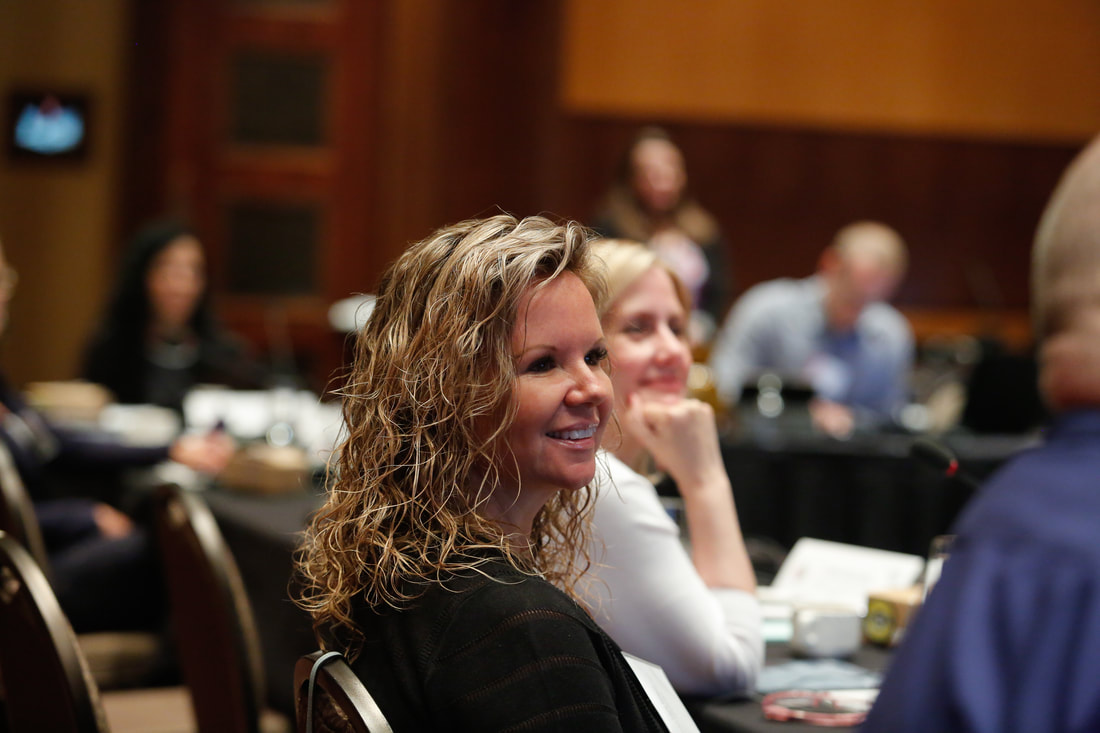 It has been one of the most amazing weeks of my life as I sit here and reflect on my time spent in Ottawa.
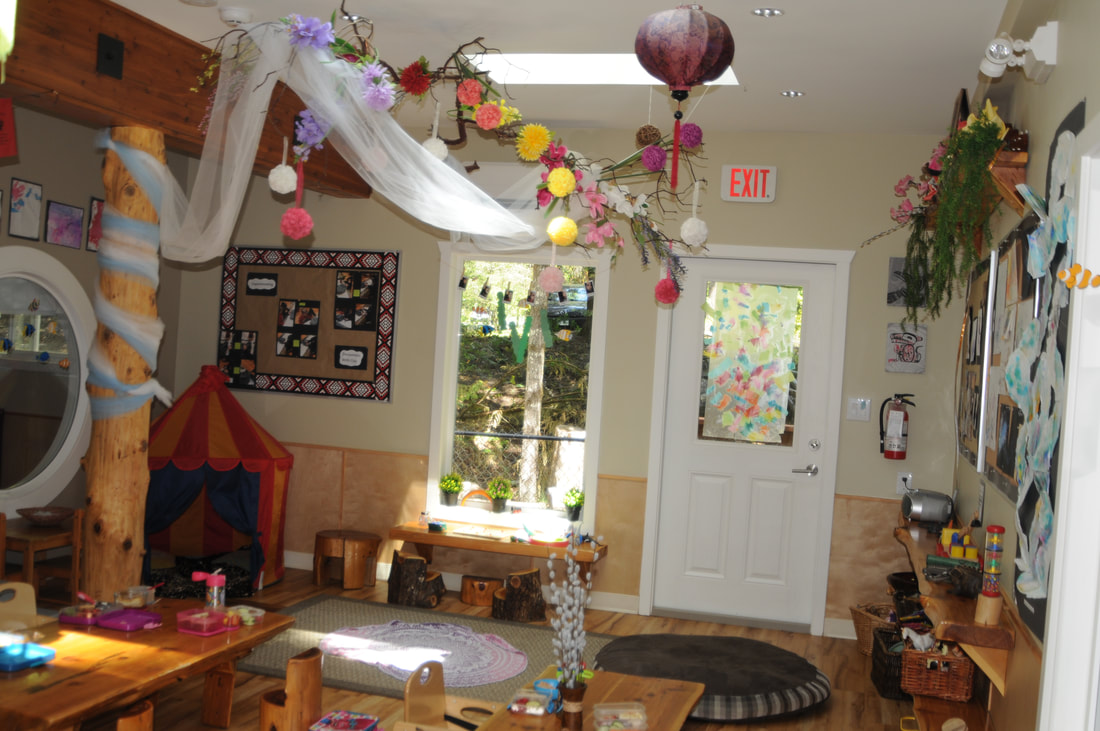
There were 5 Early Childhood Educators chosen for this award across the nation. It was so inspiring to meet the incredible teachers from across Canada who all teach in various provinces with their varying skills. We were all so different, yet joining together to accept this prestigious award together. One of the recipients, Amandine; also works as an early childhood educator in Yellowknife. I was so inspired by her story. The day she flew home it snowed again! It's the end of May! I can't imagine what it would be like to teach small children in an environment where there is snow 6 months of the year, full daylight on some days, and full darkness on others, and the protocol for coming indoor during the winter is -33. (children start to cough a lot at this temperature, and they become in danger of freezing their lungs) This just blows my mind. People are amazing! Our local MP Elizabeth May also came to congratulate me. She was voting during the ceremony, but she managed to come over and have a glass of wine with me after the awards. What a beautiful and kind woman she is. We are VERY lucky here in BC to have such compassionate representatives. She is also quite hilarious! Meeting the Prime Minister was surreal, and epic in is own quiet way. I ried to slow the moment as best I could, walking mindfully across the stage (repeating don't trip, don't fart) in my head. I was more worried about stumbling in my tall red shoes than anything! But they did make an impression, and they matched the red in the background Canada flags perfectly! lol. It was Justin's anniversary this day, so we all knew our time with him was very limited. Selfies after the awards were kaibosched immediatly when we were told he would be racing off to meet Sophie for a date! I did have an opportunity to congratulate him on his anniversary, and he was very genuine and kind when he spoke. He congratulated me, and told me that my nature program was very impressive. He was all smiles and kissed both sides of my cheek very traditionally. My 20 seconds were over in the blink of an eye. The week we were there, we were treated like Royalty. There were beautiful buffets, interviews, media opportunities and lots of time to collaborate with the other recipients. I think there were 16 of us in total, and many brought their families and spouces with them. We visited the Science Museum, Q & A period with Mr. Speaker (what a sight that was to see!), Parliament Hill, and a pin ceremony as well. Overall, this experience has been life changing. When I first arrived, I didn't feel worthy of this recognition. I thought to myself, "How am I actually getting this award? By the time Ieft Ottawa, I was in awe. The other recipients LOVED what I was doing here in BC with small children! They LOVED the idea of Nature daycares, outdoor napping, muddy buddies, forest walks etc etc. They made me feel worthy of this award. It was te recognition from my colleagues that made this feel earned. That is worth it's weight in gold! Thank you. Lexie 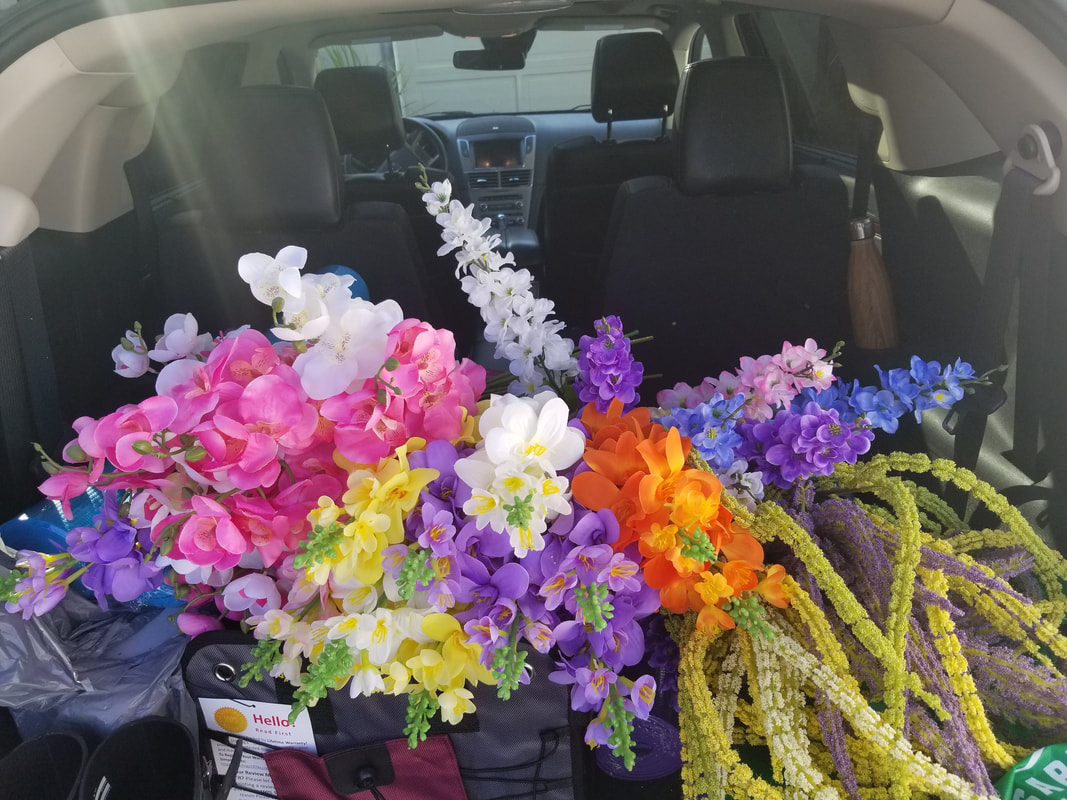 It's Friday afternoon and as usual I am buzzing around all the centres, trying to connect with all my staff before I rush out in time to pick up my youngest daughter from school. I don't live in this neighborhood, although I have travelled these roads daily for the past decade. I know I must leave by 2 pm to get to my daughters school by 2:40. There's just not enough time in the day to get everything I need to done! I enter the Spirit Bear Lodge, hands full with bursting Dollar Store bags, books and keys in hand. The fresh scent of Lavender immediately hits my nose, and I am welcomed by two women engaged in conversation in the atelier. One is our Atelierista the other our cleaner. As the two ladies continue their conversation I am then greeted with running knee hugs from two of my little bears. I feel so welcome here. This is my second home. I start to find places for the new books on the wooden shelf, and I start to sort through the giant Recyclable bag from the Dollar store. So many things.... I had an idea one night while I was thinking about spring and all the flowering plants around the property. I thought, what if I could bring in those bright flowers and make them last? I had found these incredibly beautiful silk and fabric flowers from the dollar store that I thought would really make the centres look incredible. I started in the Cub House and slowly made my way through the 4 other centres, decorating with bursts of colours everywhere. As I sat in conversation with one of my staff, we both agreed that the flowers had such a beautiful and soft touch to them, and it really helped to brighten the space up. In the Reggio philosophy, Loris Malaguzzi encourages us to use he environment as the third teacher. We create beautiful spaces worthy of the beautiful children who occupy them. As I looked around at my creative masterpieces I say to my staff, "I like the way it looks, even if they are plastic." We both kind of paused for a moment. There's that DIRTY word....plastic. I immediately thought, "Do I really love this, even though they are not real?" Looking to my colleague, she agreed that the additional flowers looked lovely and that they did add a new and beautiful element to the environment. "We're all just a walking contradiction, aren't we?", she laughed. "Yes, we truly are." I agreed uncertainly. Even if you read back to one of my earliest posts, you will find an article about banning plastics and my hatred for cheaply made, expendable land fill. So why am I purposely buying them fro my centre? I guess, even my own beliefs can be squewed a little when I get into the decorating mood. When I wrap my brain around my idea of a (throw-way) plastic and one that will last in my centres for decades, I can find some rationale with it. I know these flowers will be used and re-used over and over again for decades. I know that they can be restored very easily when they get a little dull with some soap and water. (you can even throw them in the dishwasher if you didn't know!) I have 4 centres that they can rotate through. If they happen to break (which is highly unlikely) I suppose they could be cut up and used in the atelier. For some reason, I felt like these were okay to purchase, because they don't have a one-time -only use. But even now, here I am questioning my decision. This is not the first or the last time I will question the decisions I make when it comes to my programs and the working environment. In the article that Kim Atkinson and I wrote a couple of years ago, "An Uncertain Tale: Alternative Conceptualizations of Pedagogical Leadership", I was grappling with the idea of completely changing a much loved, and very popular space in my program called the Zoom Room. This room was filled with bright primary coloured plastics "Disney" posters, cars, trains and A LOT of PLASTIC toys. At one time, I thought this room was awesome, but something deep inside was telling me a different story. It started on a weekend, I just emptied the entire space out. Everything had to go! The room had also become a holding space for "beautiful junk" that I had been holding on for who knows how long! When was I ever going to use that old water marked paper roll, those egg cartons, that flower wrap or those Christmas cards? It was too much, and it all needed to go. To shorten this story, and get to the point, this "zoom room" became an art studio, or "atelier" as they would call it in Reggio-Emilia, Italy. It took on a whole new feeling, as I covered the walls in white paper, added some pre-mixed paint jars, wooden stumps and even a giant brick of clay. Fast forward, to present day, you will NOT find a ZOOM room in ANY of my centres, but you most certainly will find our precious art studios, papered walls, lots of wooden stumps, paint jars and giant lumps of clay. In our everyday life we contradict ourselves all the time! We buy items from China, even though we protest child labor. We stop at Tim Horton's for a tea and a doughnut even though we are trying to lose a few pounds. I could go on ad on, but you get the idea. I can live with my decision to buy these silk,fabric and plastic flowers for my centre. I feel strongly that I am doing my part in SO many ways to be true to my beliefs and my word. It is nice to take a step back now and then and question the , "WHY", of what we do. I am truly so thankful to have such incredible colleagues around me who can also comment and question my actions with the sincerity that they do. We are only human. I am only one of many people that work in this environment, and it has to feel right for everyone! I am reminded that we do have many REAL flowers and bushes around the property that actually smell and bloom every spring, and I am so thankful for their beauty. Today, I will stop and smell them all. Lexie 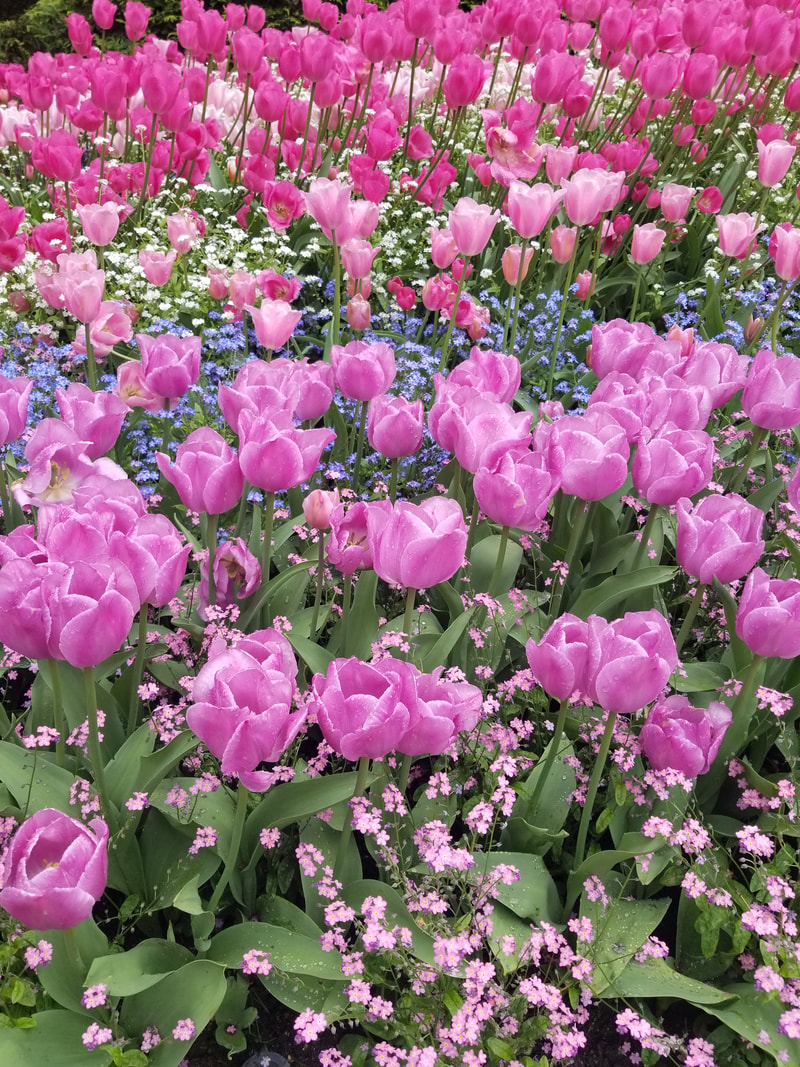  It seems like such a cliche to say, but the impact these three little words have can be so profound.
I find myself repetitively reminding my three children as I kiss them out the door every morning before school, like a broken record; but always with the best of intentions. "If you see someone without a smile, give them yours.... and above all, be kind!" I realize how "Cinderella-ish" this sounds, and the eye roll my 12 yer old is a subtle reminder of my "Pink-skies ideology" believing that we all live in a safe world with no bullies and no judgement. "Yes, we know!", all in chorus from my three little bears. "Good, I'm glad!" We all know how to be kind, but I have a sneaky suspicion that it might be a it harder for some than others. Some times being kind means saying nothing at all. That's the easiest way to be kind! Sometimes being kind is a knowing nod, or a simple smile with no words needed. Kindness can take on many shapes and sizes. A little note to your child's teacher thanking them for sending home a beautiful drawing, or simply stating that they care (It means the world to us when parents acknowledge our work) Taking an extra moment to acknowledge a colleagues efforts at work, or to simply tell them they look nice today. What a simple thing to do! What an easy way to make someones day! Personally, I find that I have a better day if I go out of my way to be a little nicer to people. Random acts of kindness are great for your own personal karma, and it is something I have been teaching my own children since they were little. Simple things like leaving the beach cleaner then you found it, offering to buy a stranger their coffee, weed-eating your neighbours boulevard for them, or giving up your seat on a bus to an elder (or anyone who needs to sit down more than you do.) Derek and I practice manners with the children when we are out for dinner with the children. We find this a great time to practice ordering respectfully by making eye contact with the server, and by starting with the simple line..."May I please have....." My two older boys are fantastic now with this, and I can see their confidence build as they get older and use their skills. It makes my heart so happy to hear them being kind to servers and wait staff, and every time I can see the smile on the servers face, or the nod back at us, acknowledging the manners hey have used. We often are told that our children have great manners. This makes me very proud. I believe that good manners are a show of respect. I also believe that all people deserve to be treated respectfully regardless of their job or profession. Loris Malaguzzi ( a school teacher from Reggio-Emilia, Italy and one of my greatest mentors) reminds us that their is no hierarchy when it comes to people. That we should treat the Principal in the same regard as the custodian. People are people, regardless of what they chose to do for work. Kindness goes a long way in my books, and I plan on continuing to remind the children in my care to use their kind words and to encourage their kind actions when conflicts arise. Kindness and working with children go hand in hand. It's easy to be kind when you are constantly surrounded by it. I feel so fortunate to work along side with some of the most caring and kind educators in the field of early childhood education. It is such a pleasure to exist in an environment that practices kindness each and everyday so effortlessly. Thank you to all of the incredible men and women at Little Bears for your love and respect for our children. Your constant kindness reflects in the incredible children we have the honor to work with every day. "In a world where you can be anything, start with being kind." Thanks for reading, Lexie 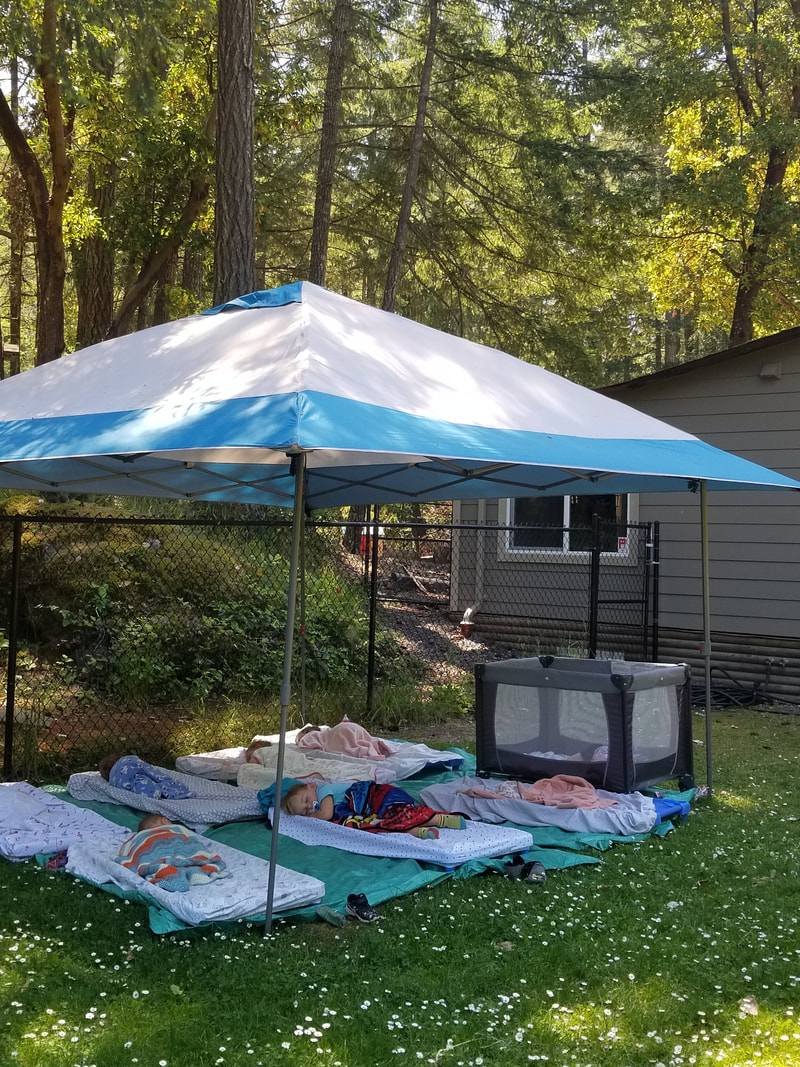 *It's cold and a bit windy. The wild west coast of Vancouver Island often brings us a plethora of crazy weather and quite often all in the same day! The running joke here is if you don't like the weather, just wait 10 minutes! (It often changes that quickly from rain to sunshine) but we love it here, and we wouldn't change a thing!
Back when I started my first daycare, Puddles & Paints; I tried an unfamiliar strategy one day to see if I could calm my overly boisterous group of pre-schoolers. I suggested we take our sleep mats outside and have our rest time under the trampoline! The response I got was hilarious! The children immediately ran to grab their mats and blankets and then lined up at the door jumping with excitement. I thought to myself, "Oh no, what am I thinking?", but I had said the words out loud so I had to follow through. I grabbed a large bed sheet from the closet first, so I could lay the mats down on the grass and not get them dirty. The trampoline was not for the daycare children to use (as per VIHA regulations), so just being under it seemed to excite the children. I lay out the giant sheet, and then the children found spaces all around to place their mats on. There were lots of giggles, and excited little bodies as they settled into their blankets. Within moments, of course, the inevitable occurred.... "I'm cold!", one child chanted out. "I have to pee!", another squealed. "It's too bright, I can't sleep!" All within the first 3 minutes! I thought, "Oh no. This is not going to work!" One by one, it seemed they all had a complaint to file with me. I remember thinking to myself, "Okay. This is day one. Just stick with it." I took each child in, as they needed. I grabbed a few extra blankets and a pillow for me to sit on. I filled up a water bottle in case anyone was thirsty, and I brought extra cups. Day one was not a success in terms of sleep. Not one child fell asleep. But what did happen, kept me believing in this concept for weeks, years and to this very day. About 20 minutes in to (nap time) I noticed the children really starting to settle down. The giggling had stopped completely, and they had stopped talking to each other. One little girl started to sing to herself (which was a normal way for her to soothe herself), but the children didn't ask her to stop (which was the normal reaction to her singing to herself by the group) It was much louder outside then we were used to, and I didn't bring the CD player outside with me. The children were quiet....strangely quiet even for nap time. What was happening? I sat in silence and listened to the sounds all around me. I could hear the cars passing on the road, a man hammering something faintly in the background, two bicyclists riding by having a quick-winded conversation, a crow having a squawking match with another crow in the distance. I sat there, eyes closed and I realized that we were all listening to the same noises. In everyday life, these sounds just disappear into the background without much notice. But when you are silent yourself, you hear so much more around you, much more than you realize is happening! (I am reminded of my wise grandmother "GG" saying to me when I was younger, "There is a reason we were given two ears and only one mouth." Ha, ha! I love that quote! I sat with this for quite some time. I had some fears about being outside with the children that I also was grappling with. I was a newer educator, and conversing with parents about new or unfamiliar pedagogy was not my strong-suit. I avoided confrontations at all costs, but I knew I was "on" to something here. I feared that the parents would not approve of their children potentially being cold, or that they feared their children would catch a cold by napping outdoors. It did spark some interesting conversations for sure! "What if a cougar jumped the fence?"..... I hadn't thought of that one, but I also wasn't surprised to hear it, as there have been cougar sightings in the past in the wooded area directly behind my house. "What if I need to call you and I can't get a hold of you?" This dates me, as we did have a cordless phone, but it often lost full charge the further you got into the yard and they knew this. "What if you need to use the washroom, will you just leave them outside by themselves?" again, a valid question deserving of a valid answer. I prepared a little letter for the parents answering these questions and a few others that came up and then I offered them a chance to respond. I documented what was working well, and what I was also noticing with the children. I took some photos of the children and posted them on the bulletin board by the door. By week four, everyone was on-board with the outdoor naps, and the children were comfortable with the new routine. The parents enjoyed seeing the photos of their children asleep under the trampoline, and some made comments about how they thought their child slept better at night time lately. I have run into children even recently, that still remember this (strange concept) of napping outdoors. "Remember when we slept under the trampoline?" that was so cool! Sleeping outdoors seems so magical to me. I know that there is a practice in the First Nations communities that they nap their children outdoors. I have been fascinated with this practice since I became an educator, and read about the Forest schools in Norway! Some of the schools didn't have a building at all, their entire program was run outdoors, all year round. Other programs had a tent or a yurt to protect the children from the extreme weather. I was having a conversation with my mom one afternoon when I told her about the outdoor sleeping. She laughed at me and replied, "You always slept outside when you were a baby! I used to take you for a walk in the stroller, and then leave you in it (on the porch) while I tidied the house! You slept for hours!" The idea of breathing clean fresh air while napping reminded me of the joy you feel from camping in the wilderness. Its exhilarating, it's liberating and it is so darn soothing! Flash forward to today. Some of the educators in my Infant'Toddler program have been experimenting with outdoor napping for a couple of years now. There are new struggles with this concept, as we are in a different location on 4 acres of treed forest. Firstly, I just have to say how incredibly proud I am of these ladies for taking this on! It does require extra planning, and extra work! The cots are not light, and the preparation takes time...but they persevere, and they are rewarded handsomely with quiet, sleeping babies! In order to honor these educators, and support them as best I can, I am working on some new and exciting plans that will allow all 4 programs to participate in this pedagogy of sleep. In the next few months, we will be building 4 new "outdoor napping" buildings which will provide the following elements. 1. shelter from falling tree debris and wind 2. a tin roof to lull the children when it rains 3. a separate closet to keep the cots dry and clean 4. electrical power for their music and to hang fairy lights 5. an outdoor washroom *Supporting the educators and honoring the children is my goal as we move forward with this plan. This narration,documentation will be continued as we start to build and we photograph the process. Two educators to note especially; Colleen and Delany are passionately living and breathing this pedagogy today. This is a group effort that I am beyond excited to share! We never sit still around here!!! .... Lexie
 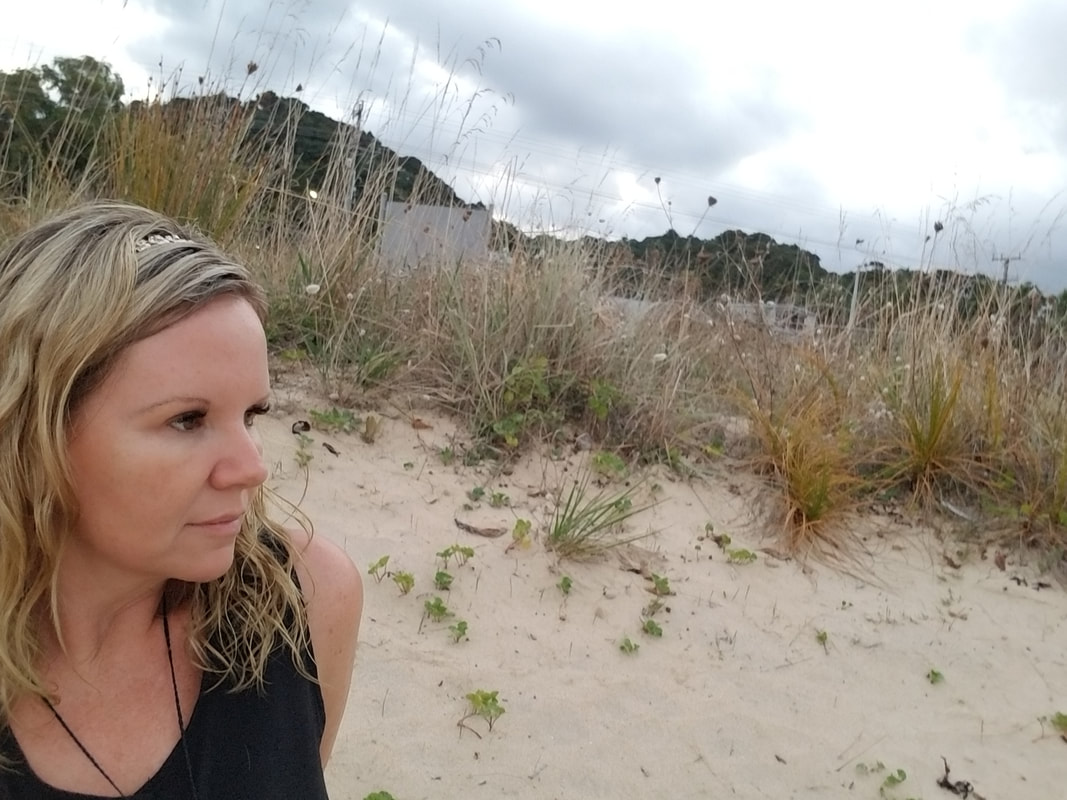 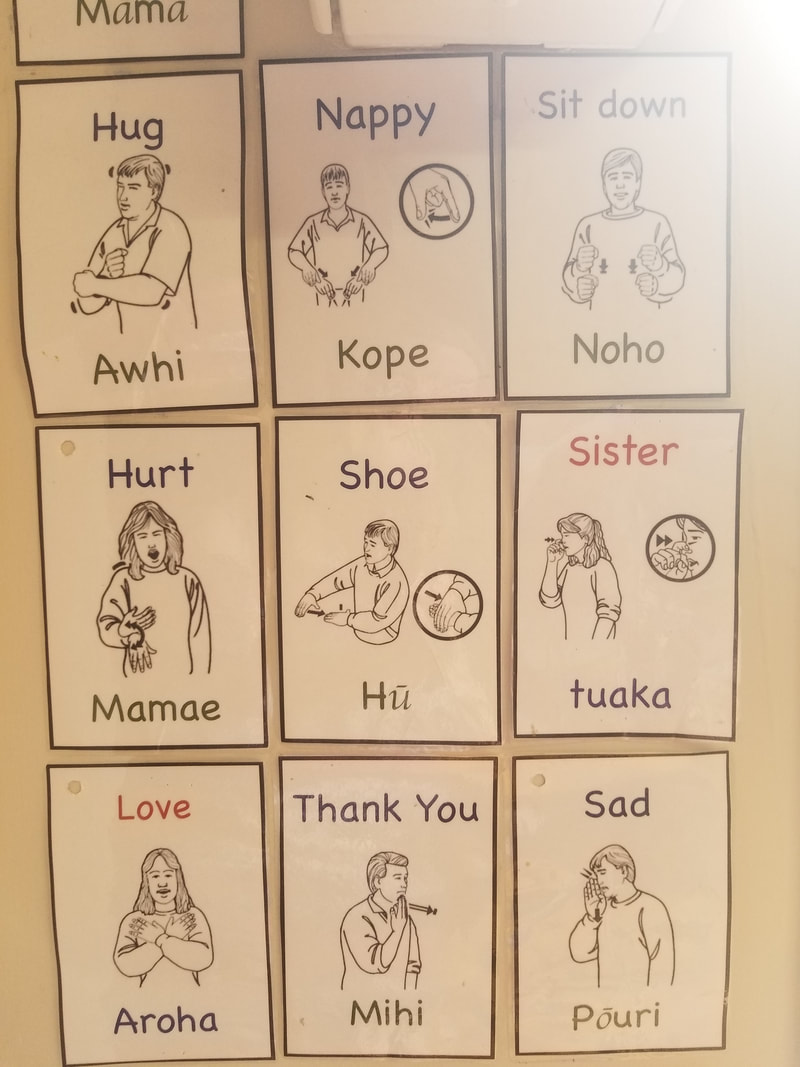 It's hard to believe I am writing this Blog post in Auckland, New Zealand. If you would have told me ten years ago that I would be here, on my own, travelling around the North Island I would have said you were nuts! My trip here is two fold. Firstly, and perhaps most importantly, I am keeping a promise I made in 2016 while studying in Reggio-Emilia, Italy. Just before my 40th birthday, I took a 9 hour flight to Bologna, Italy and then made my way by taxi to a little town called Reggio-Emilia. I had never flown anywhere by myself, let alone to another country! Feeling very brave, I decided that this was something I was ready to do! I arrived in the incredibly gorgeous Posta Hotel at 2 am. The door man woke up to my buzzer and showed me to my room. I was exhausted from my travels, but I was too excited to sleep. I was in ITALY! I remembered faintly the host telling me that breakfast was 7 am. I looked at my clock, realizing I had only a few short hours before I would need to get to breakfast and I was starving!! I must have dozed off, when I woke to the clanking of breakfast plates and peoples voices outside my door. I felt paralyzed with hunger and exhausted with jet lag. But I got up, and headed to breakfast. In the small banquet room were many women busily gathering their breakfast at the large table spread with the most incredible foods. Breads, pastries, fruits, yogurts, chocolates, it was gorgeous. There were about 6 tables and most of them were occupied. I found myself a place, and headed to the main table to get some toast. In Italy, the toaster is more like a mini-oven. You put your bread in the front, and watch it to turn brown. I watched another lady try it first, and after catching on to the trick, I tried it myself. A Kiwi lady started up conversation with me while I was watching my bread very intensely as for it not to burn. She asked me where I was from and which group I was with. I told her I traveled by myself, and I didn't know if there were any other Canadians here as I just arrived hours before. "Oh my god! Okay, well now you're with us!". Denise literally grabbed my arm and took me to sit down at her table. There she introduced me to Prue Crarer, Tasha Rawari, Cathy Young, and another Mauri lady who's name had escaped me. Well, to make a long story short, she did take care of me, and I did latch on to those Kiwi ladies and I had the most incredible journey of my life! After our week long study tour, with hours and hours of lectures, center visits, wine tours, bicycle rides, trains to Venice, late dinners, yummy Proseccos, humbling moments, and sad good byes we promised to keep in touch and I promised to visit them in New Zealand. We all promised to return in 2018 to Reggio, but Prue and I were the only ones who could make it happen. In May, 2018, Denise came to Canada , and stayed with me for a week or so while her husband and her explored the Butchard Gardens and other local sites. So here I am, in February 2019, IN NEW ZEALAND! It has been an incredible week so far. Denise arranged for me to visit centres right away. I have seen 4 Reggio-inspired centres so far and I will visit 9 in total. 4 Kids & Whanau (Whanau means family) and is pronounced "Fah-No". I will share a little about the first centre, now. We met Sam at this centre today. Sam and I also met In Reggio-Emilia so there were lots of hugs! (Denise, Sam and I rode the Gondolas in Venice together from the 2016 tour, so we had lots to talk about) This centre is attached to a church. The beautiful indoor /outdoor space provides care to under twos, and over threes.(multi-age) They have a"rolling tea" which is basically like our open snack time, however they have a cook making 4 meals a day. Eight children can sit and help themselves to the food at their own time. Others have to wait their turn for a seat. The teachers work on "Projects" which run for about 3 months in length. They use photography and narration to document their work. There is lots of documentation on the walls, and evidence of a very rich program.The teachers have left "traces" of the children's work everywhere. The educators are on the floor with the babies, and the babies are (cool) dressed in diapers and very little clothing, deliciously dirty and very engaged. They are all very curious about me. I was able to take some photos, which I will have to add when I return to Canada.(stand by) This program clearly embraces the Maouri culture beautifully in all areas of their centre. I was able to observe the written language on their walls, and in the children's work. Before they eat, they sing a beautiful Maori prayer. I was immediately in love with the feeling of unity and inclusion in this centre. At lunch, Sam's mom Glenda joined Denise, Sam and I, and I was able to ask more questions about the program. It was interesting to note that there is no Immunization policy. They are heavily enrolled by children from all over the world who come as refugees and often English as their second language.( and for most, they have no English language at all) The staff as well have the option to be immunized or not. It's their choice. I have attached some photos of this gorgeous centre. I am very interested in their documentation and how the educators weave in the Te Whariki (ECE curriculum). The Te Whariki (pronounced Te Far-IKI) means a woven mat for all to stand on. The Te Whariki weaves in 4 principles and 5 strands. 4 Principles: Empowerment, Holistic Development, Family & Community,and Relationships. 5 Strands: Well being, Belonging, Contribution, Communication and Exploration. "Together these principles and strands give expression to the vision for children that is the heart of the Te Whariki." It is just now, that this journey really begins. With this new document in hand, my notes, my NZ Whanau, many resources, photos, and "Google", I am ready to learn. Stay tuned.... Lexie 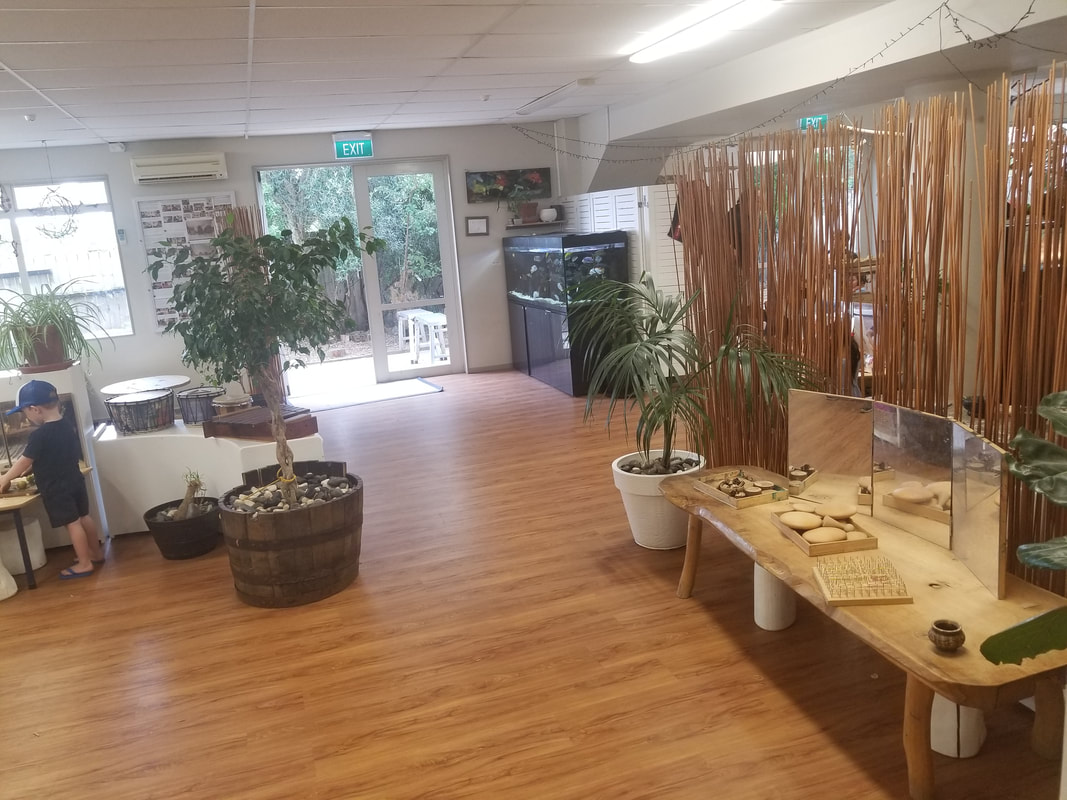 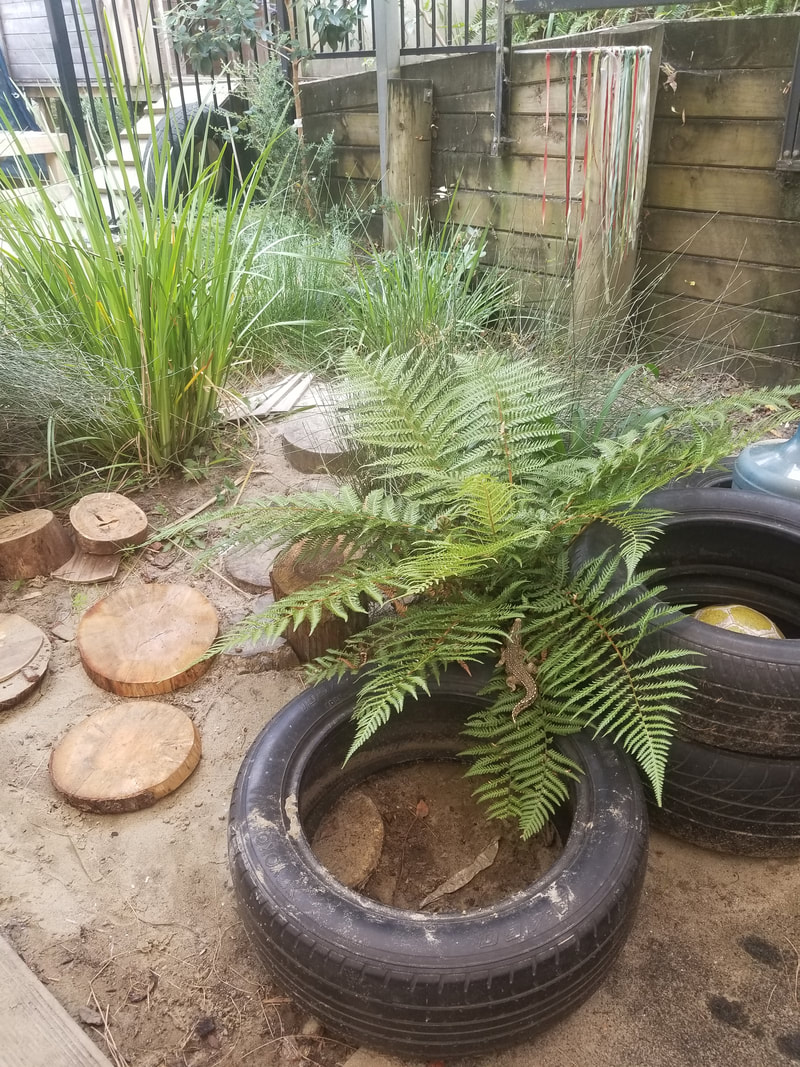 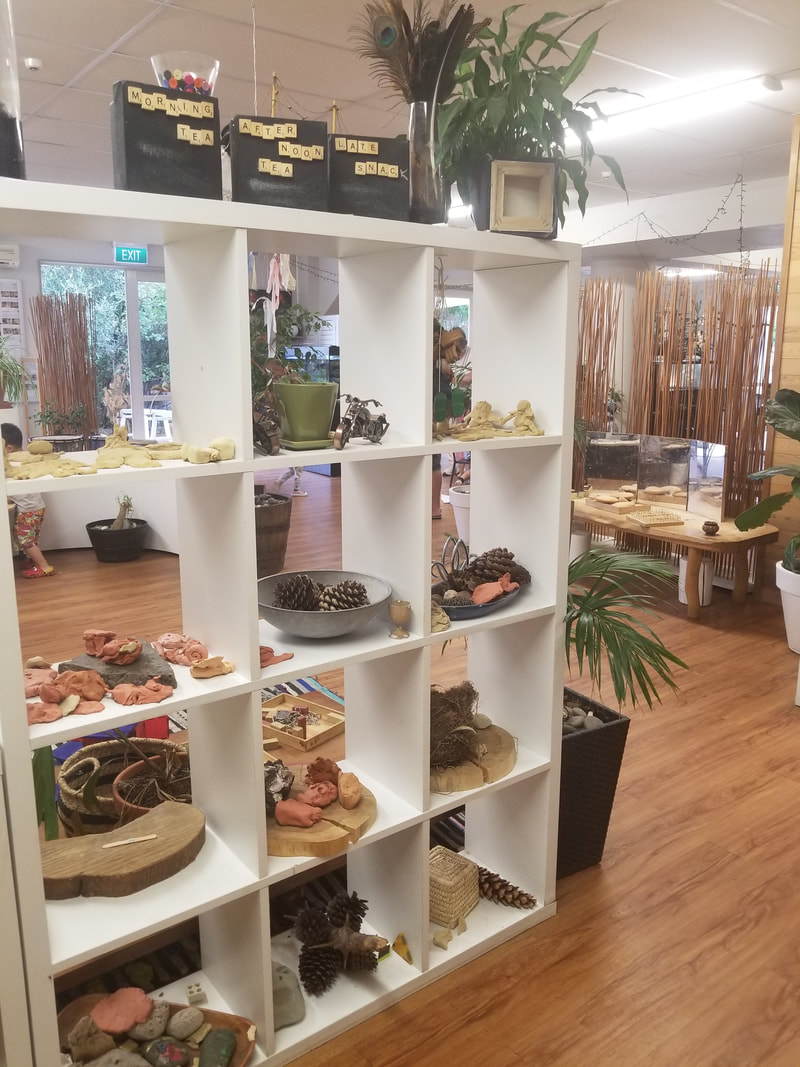 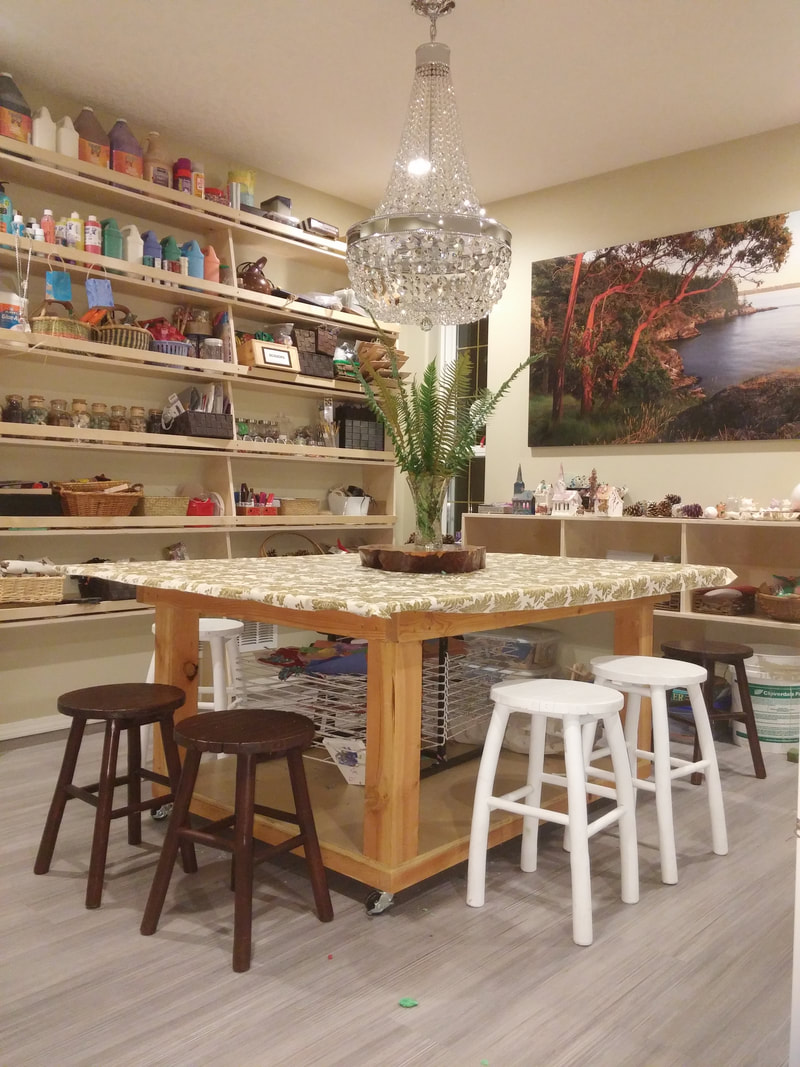 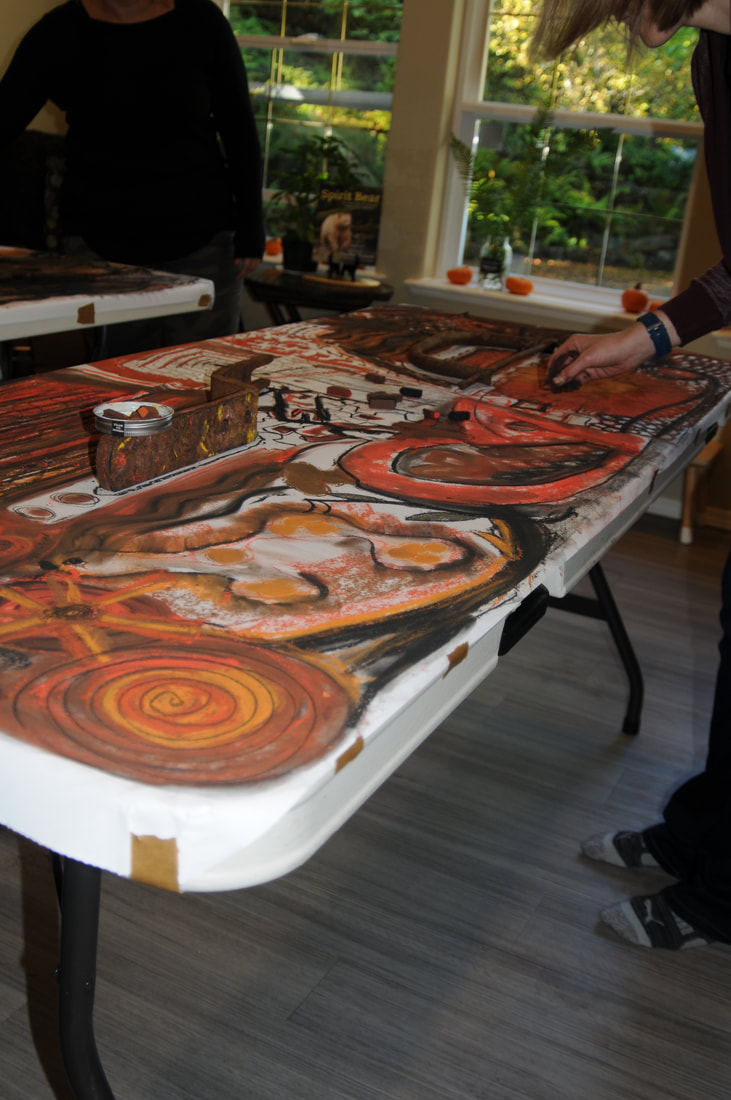   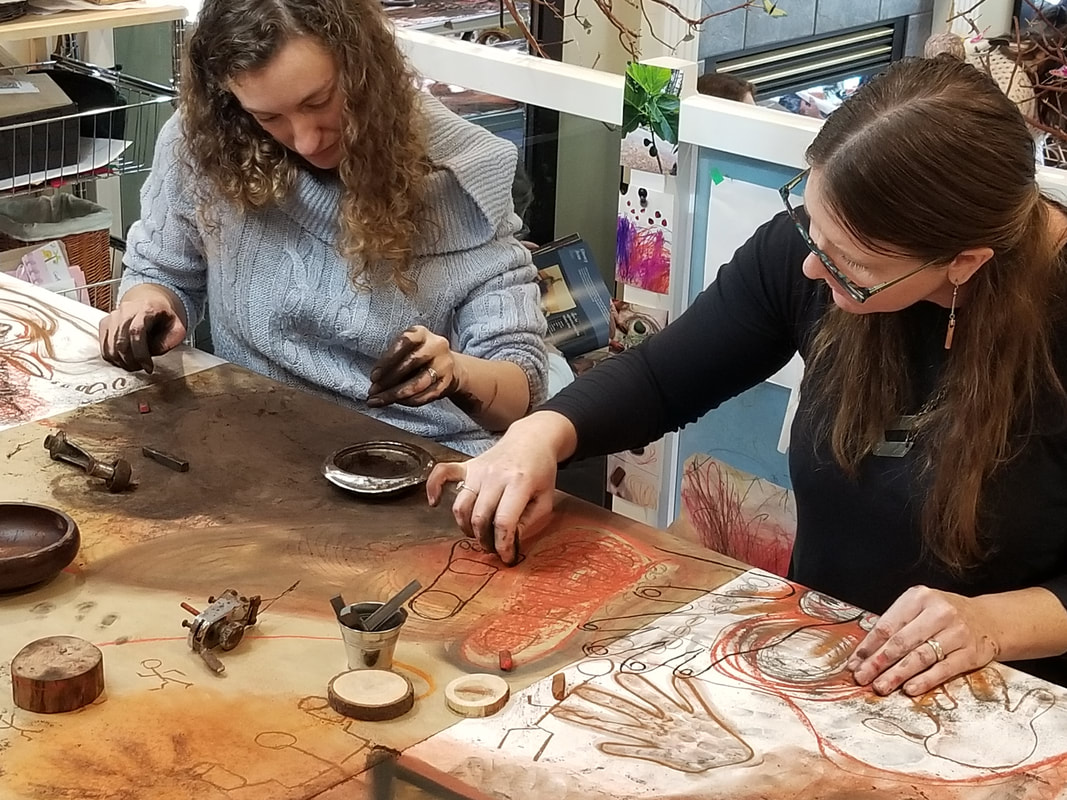 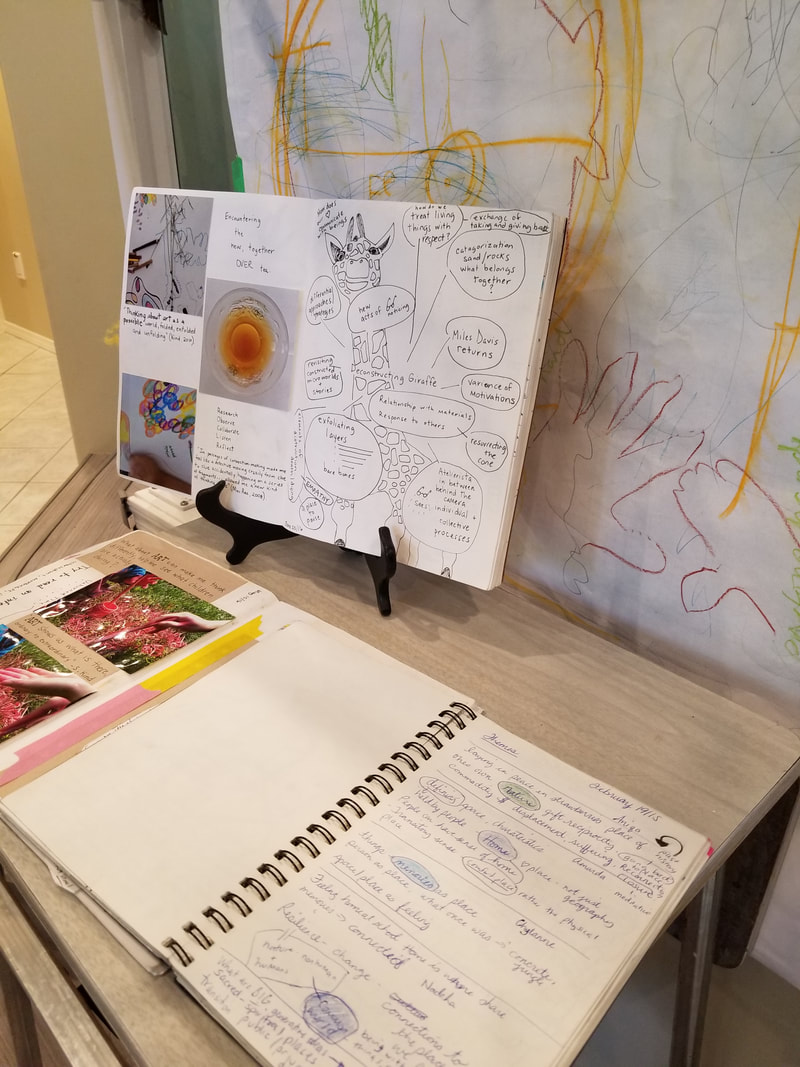 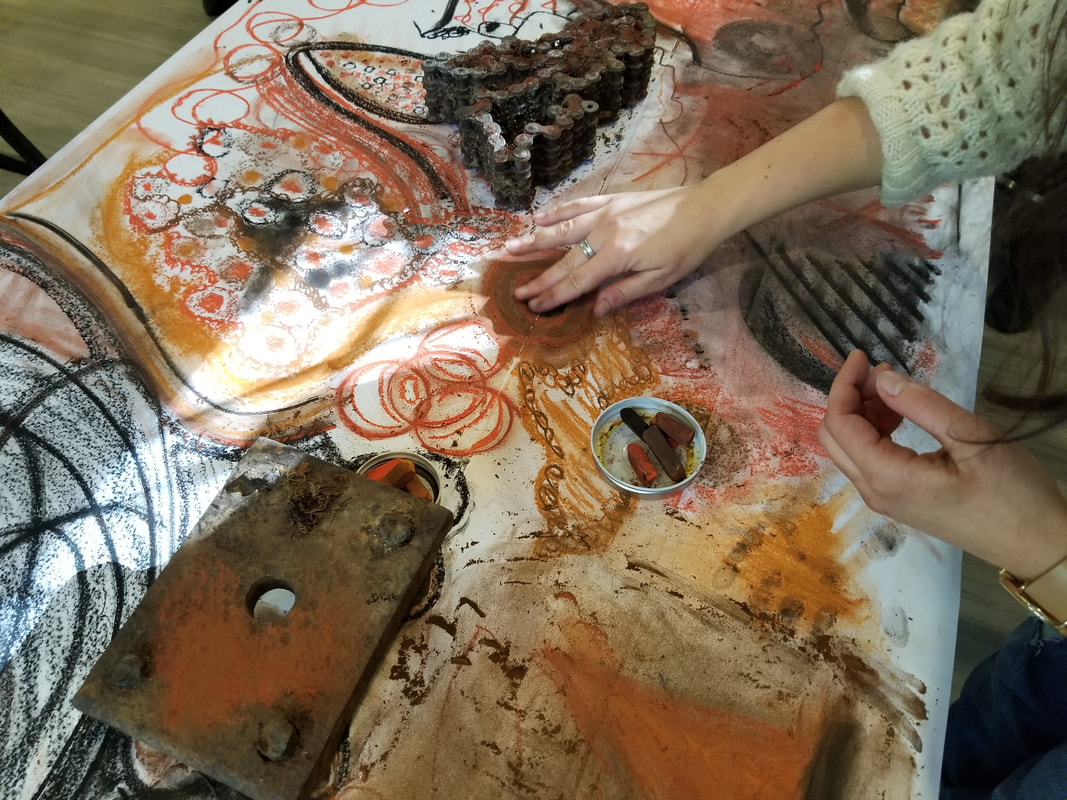 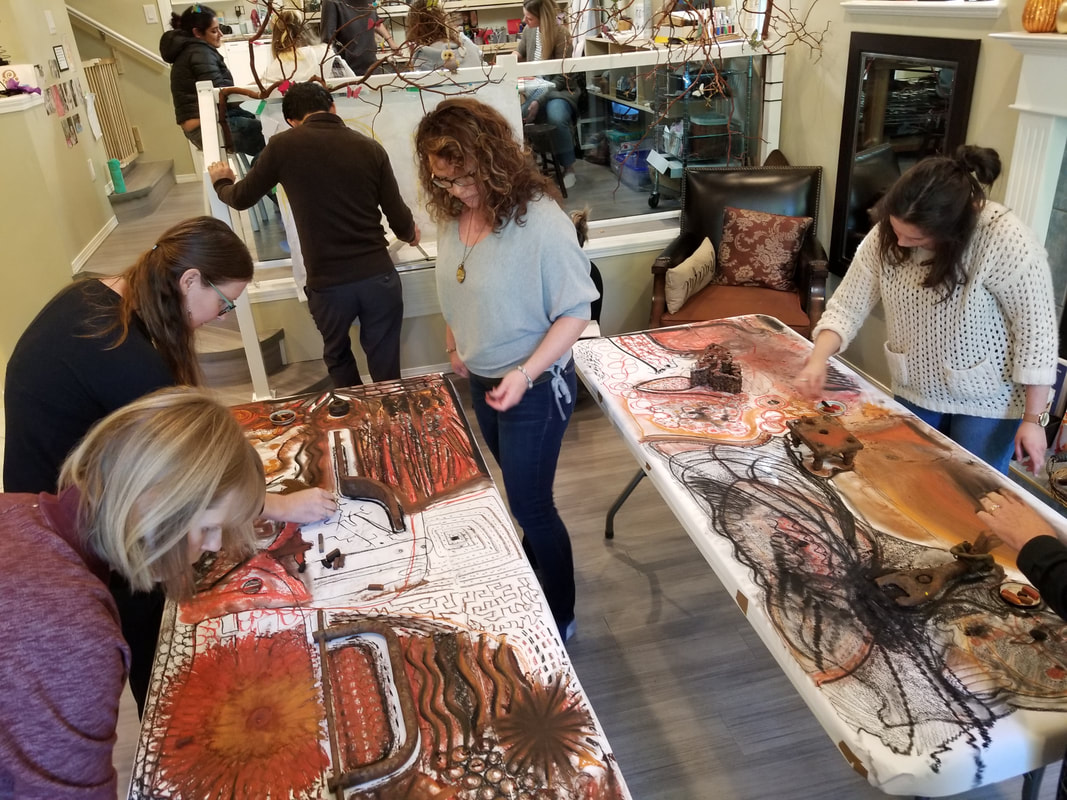 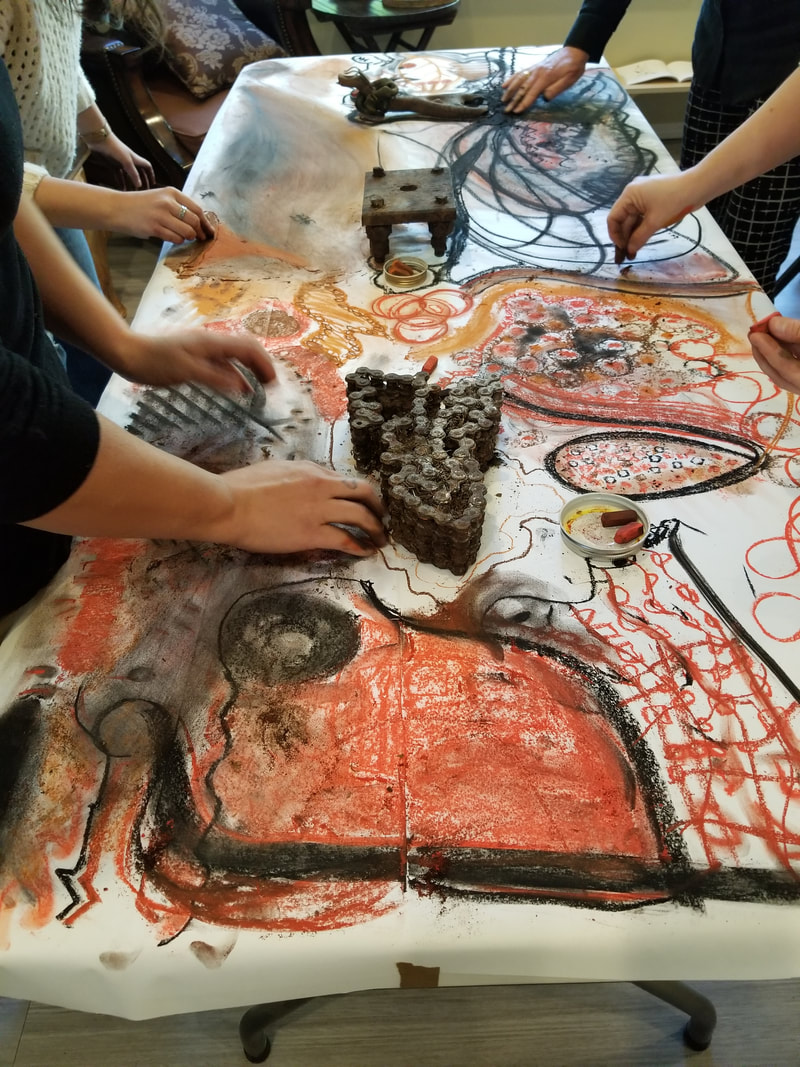 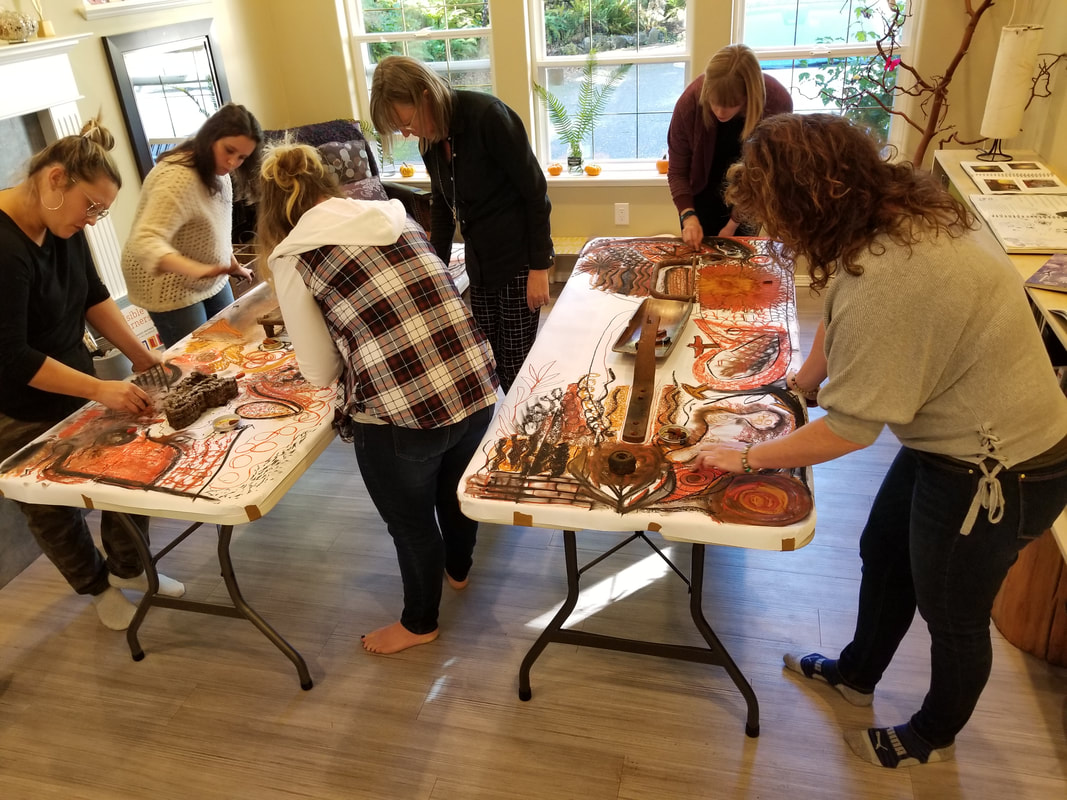 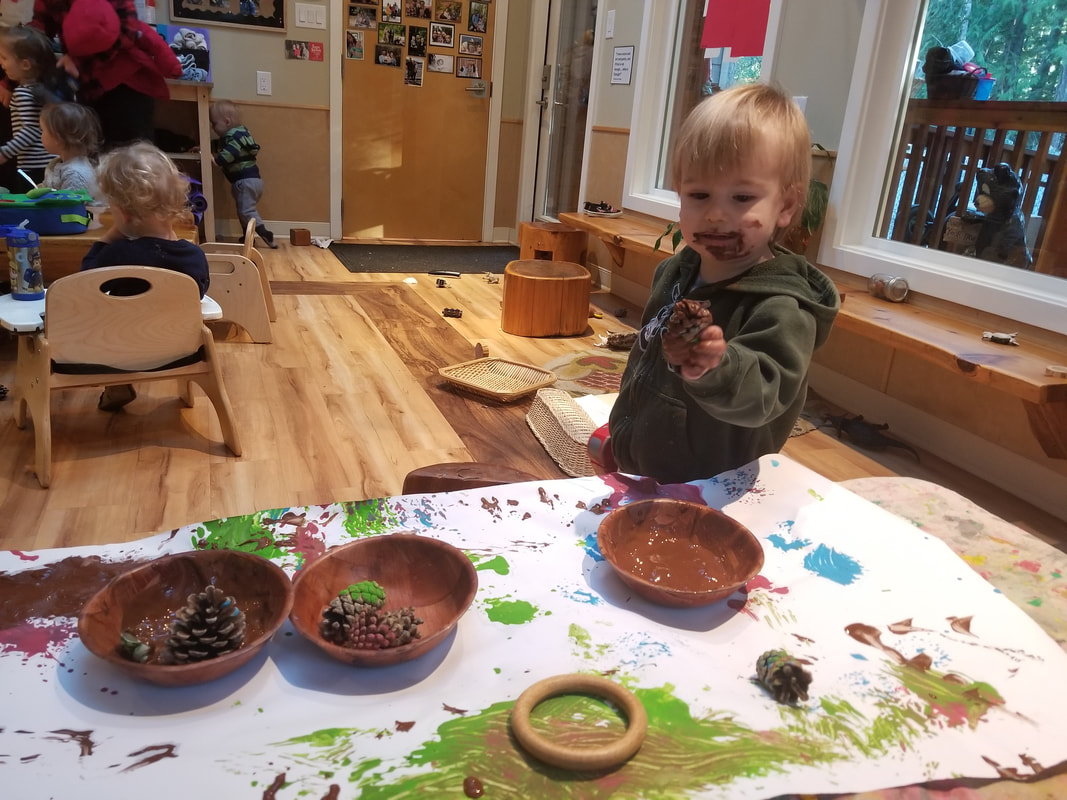 On a very wet, very typical December evening we hosted an Art Show at Lexie's Little Bears to showcase the work the children have been creating with our Atelierista Cheryl Cameron. The families were invited to walk through all 4 programs with their children, and (see) read, feel, smell and experience the "mark making" which has occurred in the programs. We use the term "mark making", as one acknowledged in the Reggio-philosohy for the young children who leave their mark on a page.... Its like (proof) of being there. A child will leave a mark that can be witnessed forever on. A mark can be acknowledged as a child's work. A mark speaks to us. A mark may tell us a story, or how a child felt when it was left... a mark has history, length and significance. Every child leaves a trace.... I will try my best to showcase some of the work Cheryl presented to us in the art gallery. We will be leaving the art up on the walls for some length of time that feels best.The children are so excited to tell us their stories, and the educators will document them as they unfold.This is a multi-faceted process in the philosophy of pedagogical narration. We are all learning, we are all invested in the time and the process. What is the end goal of this process you may wonder? Truly, there is no actual (end) to documentation, but our goal remains consistent, and that is to create an environment full of meaning. We need to continuously build on relationships with the children , their families, our colleagues and our community. Educators cannot speak just one "language"..... they need to be open to the HUNDRED Languages that children speak. (Loris Malaguzzi, The Hundred languages) Children use dance, music, movement and art to communicate with us. It is the job of the educator to always be open to view the child as a whole. To view them as a child who is full of wonder and potential; a capable and intelligent being. Educators adjust their image of the child constantly based on what the child teaches them about themselves! Through Pedagogical Narration we share our thoughts and our ideas. It is an act of visibility and communication. Documentation "shows" the art, the traces left, and the marks made. It shows time. Documentation makes the learning that has occurred visible to others. Throughout this process, I too am constantly learning and gathering. An educator must always be a researcher and a "learning person." (Loris Malaguzzi) I will do my best to document the art in the next few months.... thank you for reading. Lexie Biegun 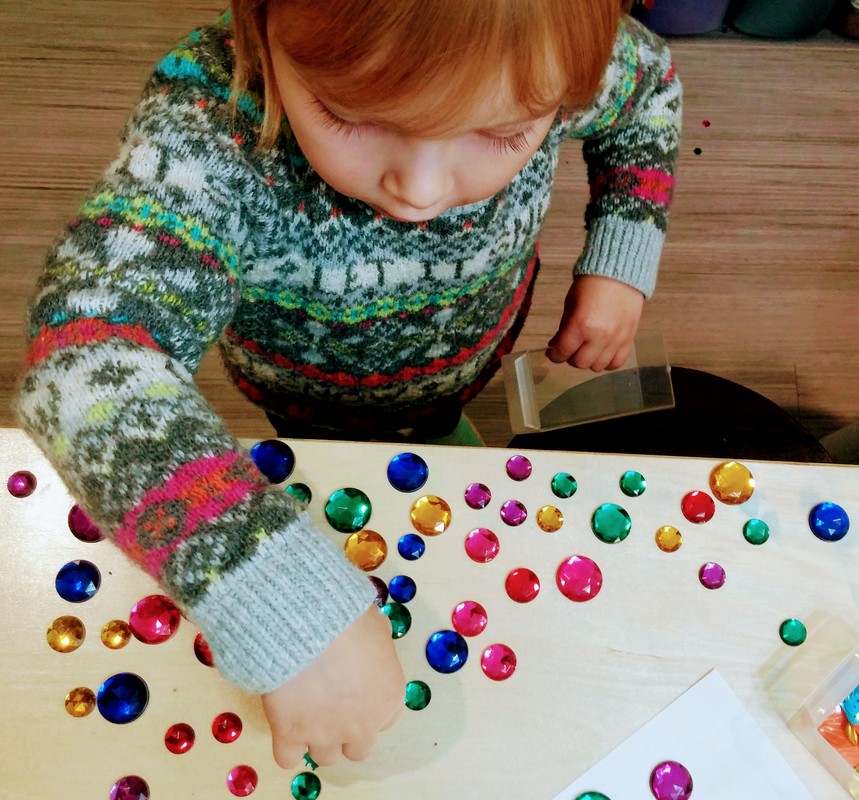 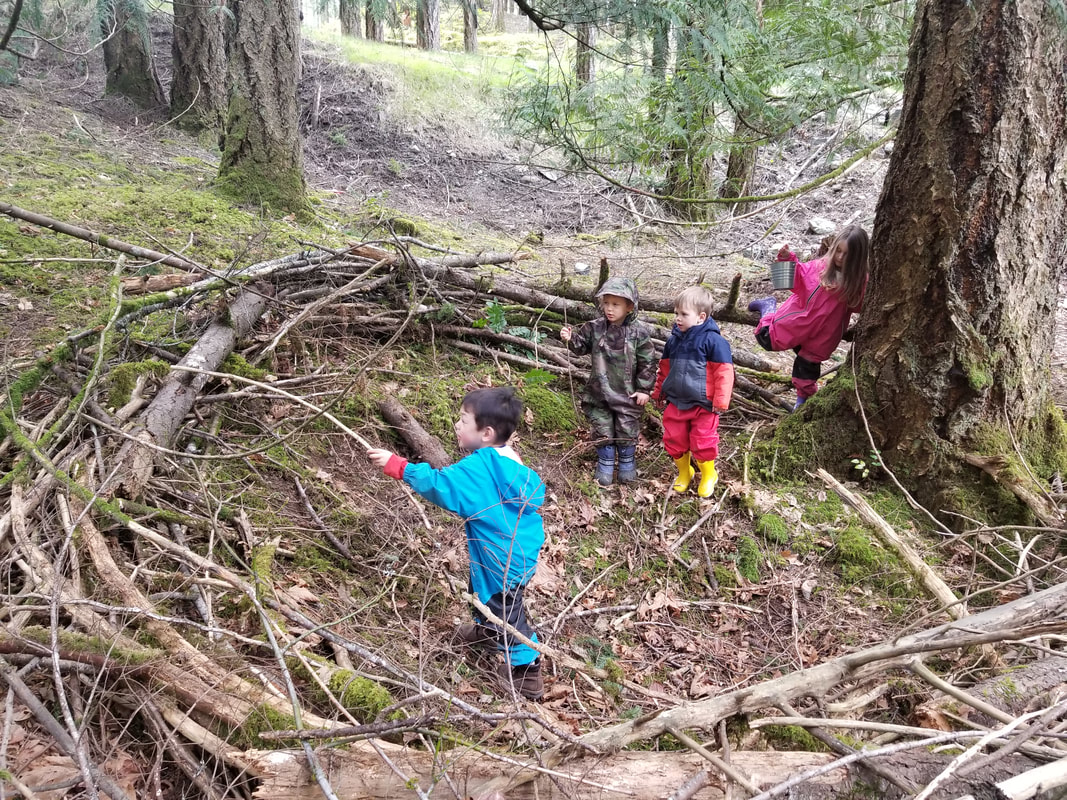 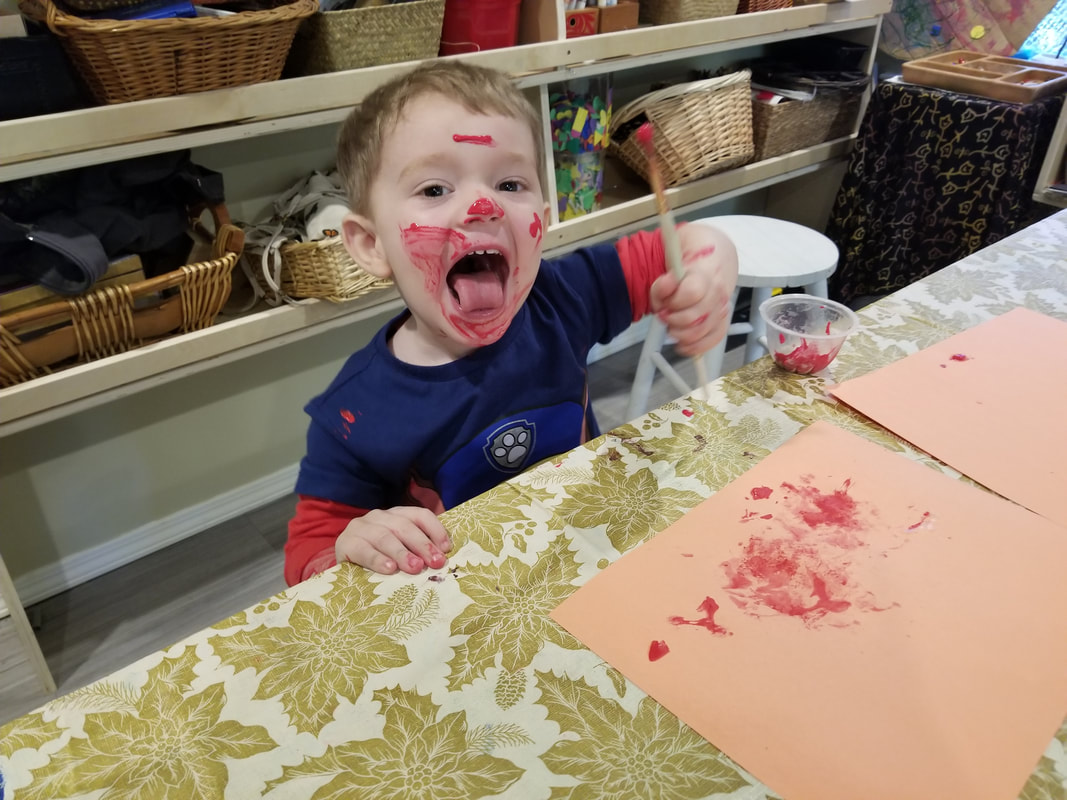 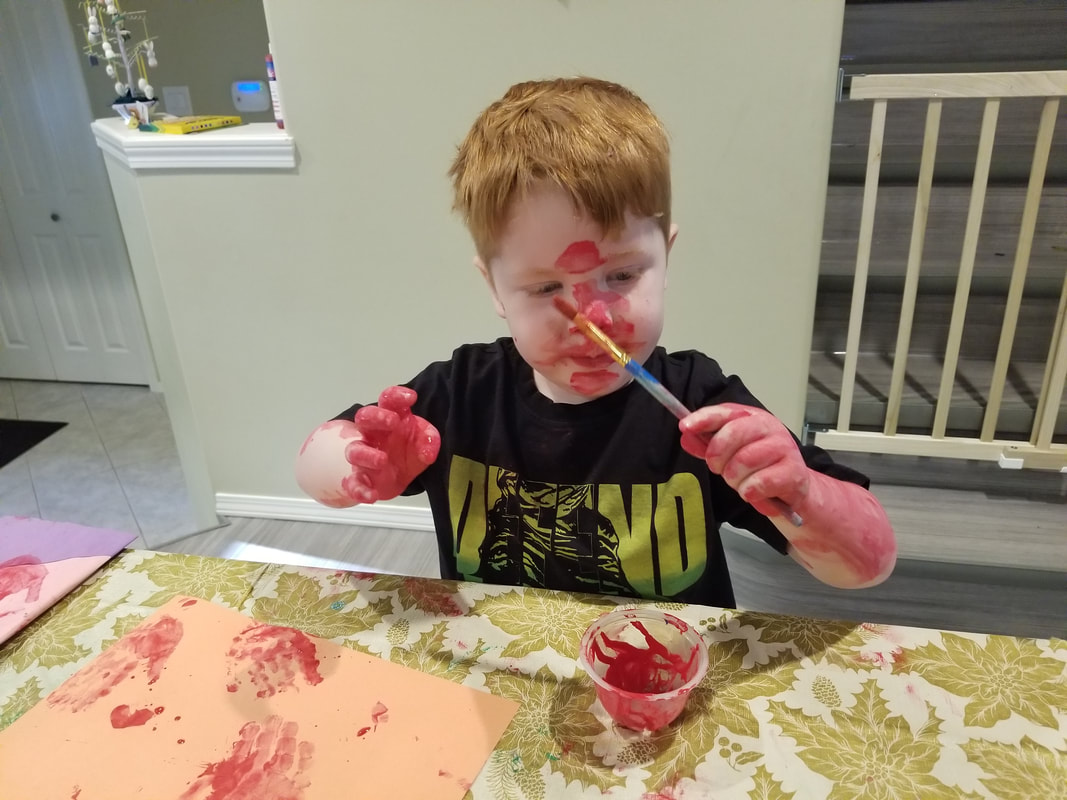 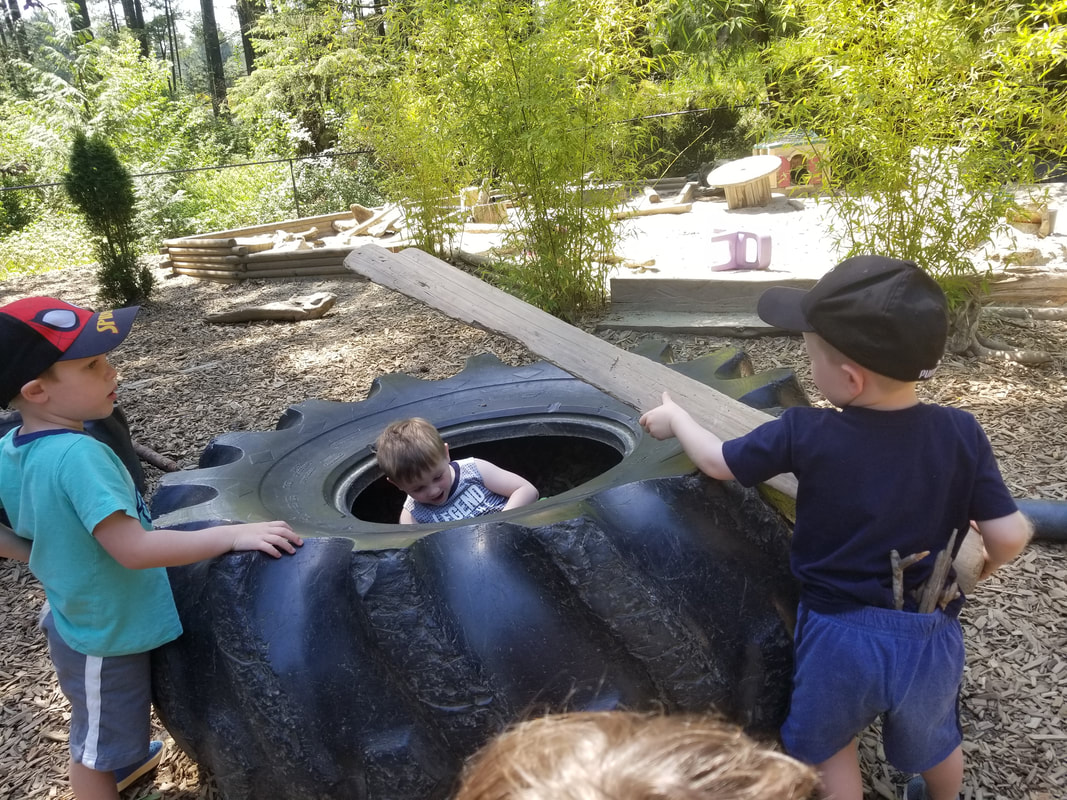 I've been doing this a while now... taking care of children and their families, and my large staff of educators.
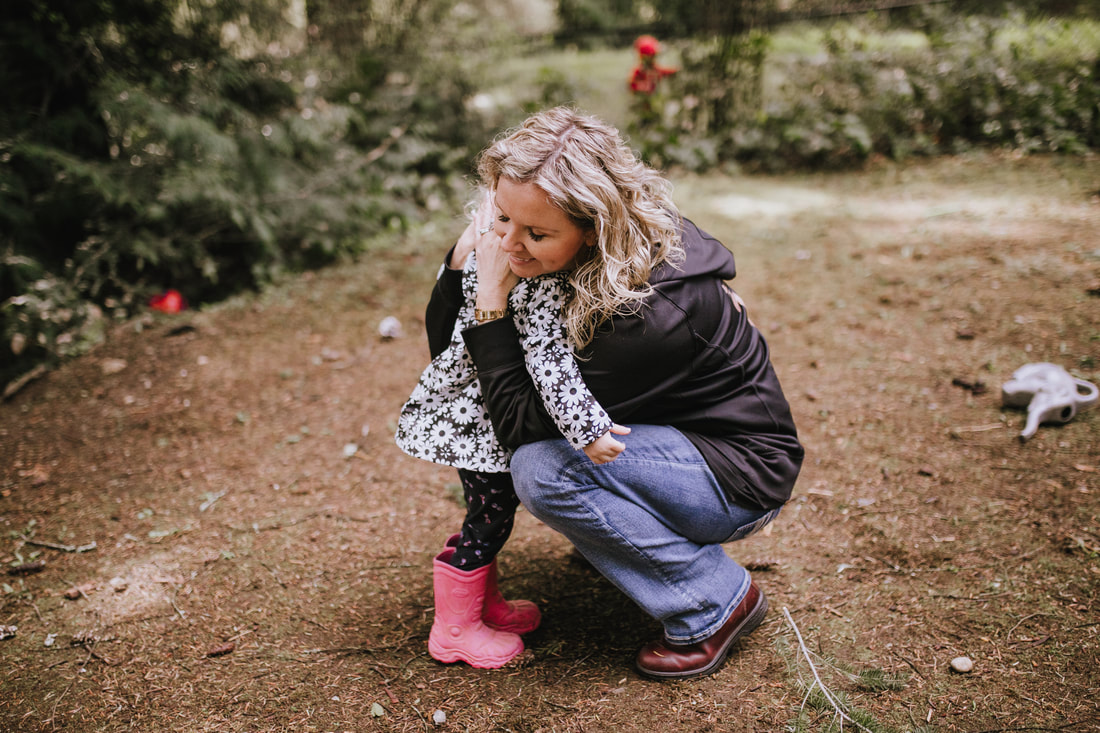
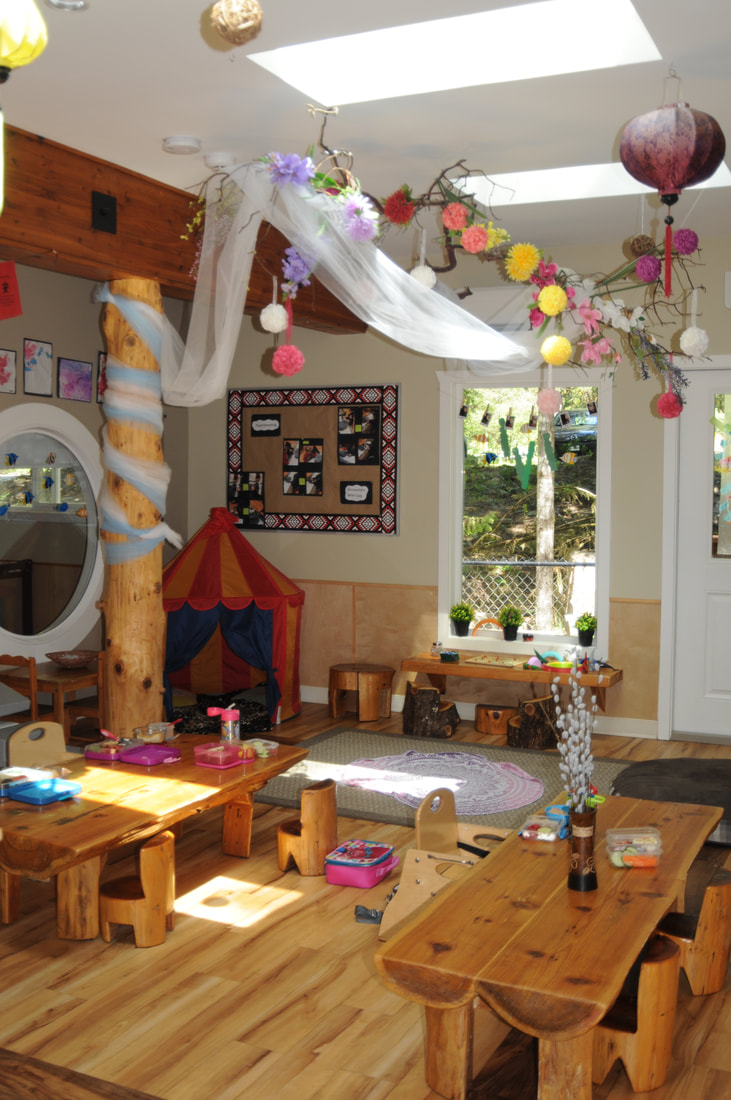
In 2008 when I expanded, and created Little Bears, I had no idea that it would grow to the business that it is today. I sit in silence.... Today I am in my office and I can hear sounds of children all around me. I can hear educators responding to the children's stories with an excited, "Really?".. and "That's so incredible.".... my staff are amazing. I feel so lucky to have these incredible educators working in ALL of my centres. The past 6 months have been tough. There has been many highs and many lows throughout my 23 year long career, but the past 6 months have been especially trying on me..... Every Licensed centre has felt the crunch Every centre has lost staff (many) due to low wages, Every child care owner I have spoken with is at a loss over how to find qualified staff, and how to pay them well enough so that they will stay, and so that they can still afford to stay open..... "Just Breathe.... you got this!" In October 2018, I significantly increased my staff's wages.In order to do this however, the parent fees went up. (now the parents feel more pressure).... I have hired 5 new educators, and we are so excited about some Government news that is going to be announced soon. The centre took a huge hit with the wage increase, but it is necessary to keep the wonderful staff I have happy, as well as making a living wage. They deserve this.... Things are looking up and I can feel my dreams starting to take fruition..... slowly There are new grants available that will help us finish the Spirit Bear Lodge and create another Infant/Toddler Program! We WILL be able to add a sprinkler system , and wheel chair accessibility to one of our buildings, allowing children with special rights to enter safely. Staff wages will be topped up again, in early 2019, and again in 2020. (a silent ..yessss!) After big lows, follow big highs. I can feel us on the rise, and this time; the sky is the limit! Little Bears is celebrating our 10th year this month! I remember the day it opened like it was yesterday..... My own children, now 13 and 11 were just tiny when we opened the doors. Little Eva wasn't even around yet.... so hard to imagine. We have so much to be excited for, and the future is bursting with opportunity! I am incredibly thankful to have this opportunity to work with such amazing educators, and incredible families in our community. Everyday I am honoured to be part of your children's lives. What a gift. I am planning on writing monthly again in my blog, and keeping everyone up to date with all the wonderful changes that are going on around us. "Small opportunities are often the beginning of great enterprise." Demosthenes Thank you for reading, Warmly, Lexie |

 RSS Feed