Nature pedagogy: Through the lens of an Educator
  • Current Inquiries
  • My Vision
  • Pedagogical Narrations
  • In progress
  • New Page
"Through the lens of an Educator"


"Sometimes you just have to take the leap and build your wings on the way down!"

​

Picture
          
Picture

Where Pinecones meet Paintbrushes: The magic of the Atelier

8/5/2026

0 Comments

 
Picture

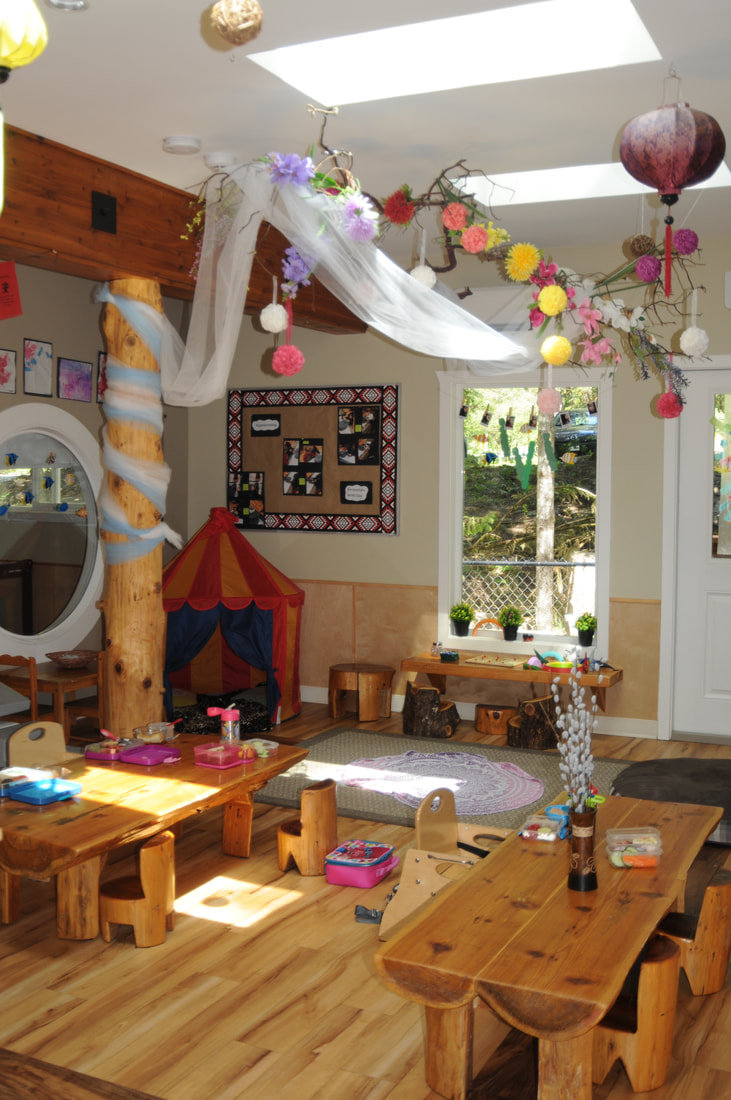
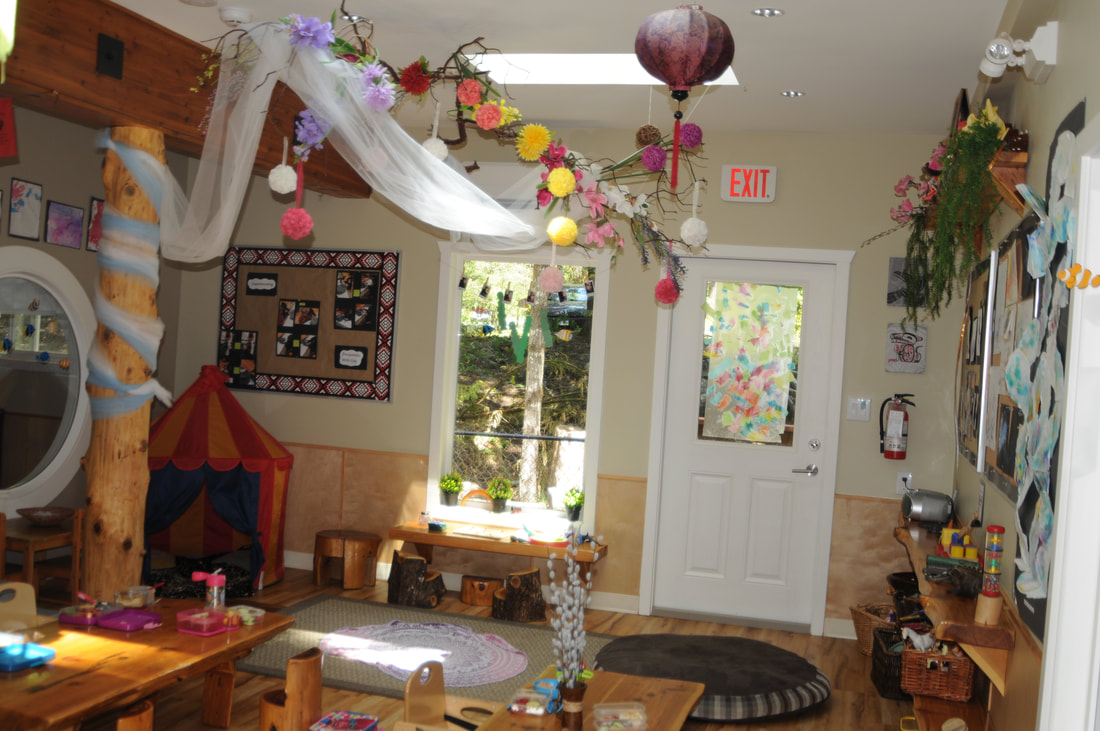
The atelier (art studio) is a core pillar of a Reggio Emilia-inspired nature daycare. It serves as a laboratory for thinking, exploring, and communicating.

Here is why the atelier is vital and how it drives a child's development.

What is the Atelier?
* A creative hub: A dedicated space filled with diverse, age-appropriate visual materials.
*Research lab: A place where children explore ideas and hypotheses.
Nature Extension: A bridge bringing outdoor natural elements indoors for deeper study.

The importance of a nature daycare like Little Bears:

*Material connection: Children bring forest collections such as seeds, leaves, pinecones, branches & feathers) inside to dry, study, preserve, and discuss.

*Environmental Literacy: It deepens a child's relationship with the natural world through artistic expression.

*Documentation centre: It makes children's outdoor learning visible through their displayed creations and words.

Impact on Child Development

*Problem Solving: Children figure out how to balance structures, categorize materials, identify their findings, and physically engage with natural items they may not normally pick up from the forest floor.

*Scientific Thinking: They observe textures, trial and error, and material transformations (such as decomposition)

Symbolic Thinking: Children translate abstract outdoor experiences into tangible models.

Communication & Expression:
*The 100 Languages of children: it honours the Reggio belief that children have a hundred ways to express themselves. (through paint, clay, music, movement, building, etc)

*Alternative Literacy: it gives preverbal or multilingual children a powerful voice through their art.

*Narrative skills: Children learn to tell complex stories about their forest discoveries using visuals such as photos, drawings, documentation, etc.

Physical & Emotional growth:
*Fine motor mastery: Using paintbrushes, clay tools, and small nature items builds hand strength.

*Emotional Regulation: Working in smaller groups with natural, raw materials such as mud and clay or watercolours offers a calming, therapeutic sensory experience.

Confidence: Creating unique, self-directed work builds high self-esteem and autonomy.

The atelier is a remarkable space because it transforms nature into deep human understanding. It bridges the wild freedom of the outdoors with the thoughtful, creative reflection of the indoors.
By treating children as capable researchers and artists, it turns a simple pinecone or leaf into a tool for scientific discovery and poetic expression.
Ultimately, the atelier is where children's invisible thoughts, questions, and connections to the earth are made beautifully visible to the world.

As always, thank you for reading.
With gratitude,
​Lexie


Picture
Picture
Picture
0 Comments

No classrooms, no Walls: why forest daycares win.

7/10/2026

0 Comments


Have you ever heard the expression, "bouncing off the walls?"
​

Picture
Picture

Imagine a childcare center where the ceiling is the sky, the carpet is the forest floor, and the toys are sticks, mud, and pinecones.
No plastic blocks, no fluorescent lights. No four walls!

Welcome to the world of Nature daycares in BC.
While traditional early childhood education keeps children indoors for most of the day, nature daycares such as Little Bears are flipping the script.
I have written extensively on this topic, as it is a huge passion of mine to expose young minds to the wonder and magic of an outdoor classroom. Trading the traditional daycare experience for the wilderness is a massive win for developing minds and bodies.

Let's look at the indoor classroom. A traditional indoor childcare classroom is flat, predictable, and heavily cushioned. Nature is not!
When our children navigate uneven forest floors, climb low tree branches, and scramble over rocks, they develop superior motor skills. They learn balance, spatial awareness, and core strength naturally. Studies show that children in outdoor daycares fall less often and have better physical coordination than their indoor peers.

In a world that is increasingly bubble-wrapped, forest daycares teach children how to manage risk.
"Can I climb this log? Is this branch sturdy enough to hold my weight?" Children learn to ask these questions themselves rather than relying on an adult to say, "Be careful."
Instead, a watching educator might ask, "Do you feel safe?" This simple change in language allows the child to look within themselves and ask, "Do I feel safe?" while still maintaining their confidence during risky play. This language helps to support genuine critical thinking skills that will last a lifetime.

Plastic toys that light up and beep offer a cheap, artificial sensory experience. Nature provides the REAL DEAL.

The crunch of autumn leaves, the squish of rainy mud, the smells of damp earth, and the sound of wind in the trees activate all five senses simultaneously. This rich sensory environment calms the nervous system and helps to improve a child's cognitive thinking.

It sounds counterintuitive to many parents, but being outdoors in the natural dirt actually keeps your child healthier.
Regular exposure to diverse soil microbes strengthens a child's developing immune system. Furthermore, we tend to see fewer contagious illnesses because viruses are spread very quickly through poorly ventilated indoor classrooms, but they dissipate quickly in the open air.

Nature is also a natural stress-reliever. Children who struggle with the rigid structure and high noise levels of an indoor classroom often thrive outdoors! The endless space, by removing the four walls of a classroom, reduces friction and many behavioural conflicts between a child and their peers. If a child feels overwhelmed, they have the physical room to step away, breathe in the fresh air, and reset their bodies. The educators who work with these children can also do this, as working with children can sometimes be quite exhausting!

At Little Bears Childcare, we not only tolerate the outdoors and all the weather that comes with it, but we actually celebrate it! By taking away the traditional four walls and using the forest environment as the third teacher, we give children the freedom to learn through exploration, curiosity and wonder. What a wonderful way to spend your day as a little developing soul.
As always, thank you for reading.
With gratitude,
​Lexie


0 Comments

Our Living classroom: The forest as the third teacher

4/4/2026

1 Comment

 
Picture
"We are so incredibly blessed to live in such a beautiful part of the world. Vancouver Island holds so much magic and mystery deep within our dense forests and stormy ocean waters.
At Little Bears, our campus is a 4-acre forest, which then backs into an additional 50-plus acres of untouched forest land.
We have a special meeting place in the heart of the forest that we call the "Forest Piazza".
Another favorite spot is through the back gate and about a 15-minute walk towards Lost Lake. The "chimney" is a hidden gem where a small stream trickles, and a large brick chimney remains from what we think must have been an old family homestead from the early 1900's.
Every inch of the forest is a learning opportunity.
When considering a forest "Atelier," our outdoor environment is a canvas waiting to be uncovered.
Unlike a blank artist's canvas, the forest is a "living canvas" already rich with "paints" and "textures"-such as moss, mud, and light-that act as invitations for discovery.
This perspective shifts the educators roll as a co-researcher into one as also a co-creator.
The educators and children can use the forest's sensory details to express complex ideas through the "Hundred Languages of Children".

One of the best parts of being in the forest while the rain is pounding down on us is the smells and the sounds of the trees and the dirt.
A torrential downpour is NOT a reason to go indoors; it is actually a profound sensory shift that reconfigures the "Forest Atelier."

When the rain pours (which is often here in Victoria), the forest transitions from a static environment to a dynamic, high-definition playground that engages a child's very soul.

A Sensory Symphony

The most immediate transformation is auditory and visual. The forest floor, usually muted, begins to "speak" as raindrops strike different surfaces-the hollow drum of a cedar stump, the rhythmic patter on broad maple leaves, and the splashing into rising puddles.

The rain acts as a saturating lens, making the deep greens of BC's moss and ferns glow with fresh, neon intensity. All Colours intensify and become alive!

Forest creatures often hidden during the dry hours-frogs, slugs, snails, and worms emerge, offering spontaneous "pop-up" laughter and wonder on our living outdoor Atelier.

For our Little Bears, a puddle is much more than a splash-zone: it's a foundational laboratory for physics and engineering.

Children naturally begin to experiment with "loose parts" like sticks and rocks to create dams, bridges, or channels to direct water flow.

They observe cause and effect firsthand-why some objects float on the puddle while others sink, and how the water's surface reflects light and movement.

Navigating slippery stumps and jumping into muddy puddles builds physical coordination, risk assessment skills, and "grit".

Our Mud Atelier: AKA: Dirty rocks and dirty water

Rain transforms the forest floor into the ultimate
open-ended medium.

Wet earth becomes a malleable "clay" for making mud pies, sculptures, or textured "paintings" on tree bark or rocks.
The "Squish" of mud between fingers and even toes provides a deep tactile experience that grounds children in the present moment, often reducing anxiety and improving focus.

***Side note: In the BC Early Learning Curriculum (ELF), one of my former staff members, Shannon McDaniel, has published a Pedagogical Narration, which was written in our forest Piazza at Little Bears!
She writes of her trepidation while removing her own boots and socks and allowing her bare feet into the mud. It's a brave and open look into an educator struggling with her own beliefs and comforts while working with children in an outdoor classroom.


There is a unique sense of autonomy and release that comes with being allowed to get wet and messy.
In an outdoor Atelier, "bad weather" is reframed as a "new world" to be conquered. This freedom fosters a sense of agency-the child is not a passive observer of the rain but an active participant in its lifecycle.

Ultimately, our outdoor classroom empowers our children to see themselves as capable, curious, and deeply interconnected with the beautiful forests of British Columbia. 
The unstructured nature of an outdoor atelier supports diverse learning styles and encourages collaborative problem solving that traditional indoor settings may not fully be able to capture. 
How lucky are we?
As always, thank you for reading. I would love to hear your comments or questions.

With gratitude,
Lexie

​


Picture
Picture
Picture
1 Comment

Mycelium Minds: The Invisible Threads of a BC Forest Childhood

4/4/2026

4 Comments

 
Picture
In the mist-heavy forests of British Columbia, Early Childhood Educators are teaching children to look beyond the visible and "listen" to the mycelium minds, the vast, invisible
fungal threads that serve as the neurological network of the forest.

The Philosophy of the "Wood-Wide Web"
British Columbia is a global hub for understanding these networks, largely thanks to the research of Dr. Suzanne Simard at the Mother Tree Project. Ece's in BC forest schools/Nature daycares use the mycelium as a primary metaphor for teaching.

*Interconnectedness:
Educators teach that trees are not isolated competitors but a living community. Through mycelial threads (hyphae), "Mother Trees" recognize their kin and send life-saving nutrients and chemical warnings to younger saplings.

*The Invisible Support:
Just as the most active part of a fungus is the underground mycelium, children are encouraged to value the quiet, unseen work of mutual care and cooperation.

*Social and emotional Growth:
In our Reggio-Inspired, natural outdoor classroom at Little Bears, we use the "mushroom underground" to illustrate how diverse species cooperate, an essential lesson for early social development. 

In practice, our ECEs facilitate "mycelium style" learning through specific outdoor experiences:

*Inquiry -Based Discovery: Our Reggio-Inspired, Forest Vision
​

In the forest, the children are researchers and investigators. The ECEs act as co-researchers alongside the children, encouraging and fostering relationships with human and non-human species. Our non-human relationships are those we form with the trees, the puddles, the nurse logs, the moss, the branches on the forest floor, the slugs, the crows, etc. The children adapt to using a mycelium-style of learning, which is a pedagogical approach that mirrors the interconnected, emergent, and non-linear nature of fungal networks.
Just as a mushroom is the visible sign of a massive underground network, our educators create documentation that makes the "invisible" learning process visible to parents and their colleagues.
Our Little Bears collect treasures such as leaves, bark, and moss to tell the story of their discoveries in the forest, reinforcing their role as active contributors to the forest's narrative.

Our 4-acre campus serves as a "living classroom" where the "wood-wide-web" isn't just a concept, but a tangible ecosystem children are taught to protect for future generations.
Through these invisible threads, discoveries and documentation, our educators are weaving a new kind of childhood-one rooted in the belief that we, like the trees, are never truly alone but always a part of a deeper, supporting web.

Thanks for reading.
With gratitude,
​Lexie


​


Picture
Picture
The dense forest floor in beautiful Sombrio Beach, BC.

4 Comments

"To Think without hands..."

4/3/2026

0 Comments

 
Picture
Picture
As a forward-thinking, childcare advocate, I often find myself re-visiting The Hundred Languages of Children poem by our Late Reggio-rockstar/mentor, Loris Malaguzzi.
 "The Hundred Languages of Children" warns that "they steal ninety-nine" by separating the head from the body and science from imagination.

Malaguzzi argues that children are born with "a hundred" ways of thinking, expressing, and understanding the world. The warning that "they steal ninety-nine" refers to how conventional education and culture systematically strip away these diverse "languages" by enforcing a narrow, standardized way of learning.

*The "Perpetrators". The poem identifies "the school and the culture" as the entities that restrict a child's discovery and expression.

*The Loss of Potential: By prioritizing only a few forms of communication, typically verbal and logical, society silences others like dance, sculpture, painting, and play.

Key Philosophical Separations

The poem highlights several ways traditional systems fragment a child's holistic experience in the world:

*Head from the body: Traditional schooling often tells children to "think without hands" and "do without head, seperating physical action from intellectual inquiry.

*Science from Imagination: Malaguzzi critiques the idea that "science and imagination" or "reason and dream" are separate things. In the Reggio approach, these are viewed as deeply interconnected; a child is a "researcher" who uses both logic and fantasy to construct knowledge.

*Work from Play: The poem warns against the cultural insistence that work and play are separate, asserting instead that for a child, they are one and the same.

Supporting Evidence and Impact

*Multiple Intelligences:
Modern research, including Howard Gardner's theory of multiple Intelligences, supports Malaguzzi's view that children possess diverse cognitive and expressive strengths.

 *The Whole Child: The philosophy emphasizes seeing the "whole Child" as strong, capable, and full of potential, rather than an "empty vessel" to be filled with information. 

*Pedagogical Documentation: To protect these "hundred languages, reggio educators use documentation, photos, transcripts, dirty notes, and artifacts -to make children's diverse processes visible and valued. By recording this information, the children are "leaving their mark" for future projects, connections, communication, and generational knowledge.

In a nature-based childcare centre like ours, the "100 Languages of children" philosophy transforms the outdoors from a simple playground into a vast, living laboratory for expression and inquiry.
By removing the 4-walls of a traditional classroom, educators allow children to use the natural world as a primary tool for communication and theory-building.

1. The Environment as the "Third Teacher."

In the forest, nature is not just a backdrop but an active participant in the learning process.

* Provocations: A simple "nurse-log" hosting ants and wood bugs or a slippery, shining path that follows a slug serves as a provocation that sparks immediate curiosity and leads to deep, child-led investigations. Our educators thoughtfully curate beautiful provocations indoors and outdoors to invite each child to explore with all 5 of their senses. Natural materials, loose parts, and beautiful treasures are used throughout the process, inviting communication, wonder, and curiosity.

*Dynamic Context: Unlike static indoor toys, the forest changes with the weather and seasons, providing a constantly evolving "curriculum" that responds to the child's daily observations.

2. Nature as a Symbolic Language

Children translate their outdoor experiences into various "languages" to process complex ideas:

*The Language of Biology: Exploring plant life cycles or the "circle of life" in a pinecone or a cedar branch.

*The Language of Physics: Testing gravity and speed by rolling logs down a hill.

*The Language of Art: using loose parts such as sticks, stones, mud, acorns, pinecones, arbutus branches, and moss to create ephemeral sculptures or temporary "homes" for forest creatures.

*The Language of Mathematics: Sorting and classifying natural objects by size, texture, or quantity (e.g., "Small stones" vs "large stones")

3. Fostering Empathy and Connection

The forest setting encourages "empathetic relating" to the natural world. For example, children may develop a sense of stewardship by carefully clearing snails from the path to prevent them from being stepped on, or by safely removing worms from the pavement and placing them on the grass. This demonstrates a "language" of care and reciprocity.

4. Documentation in the Wild

Educators in forest settings act as "researchers" and "translators."

*Visible Learning: They capture photos, record dialogue (Ex, "I wonder why....")
and keep physical Learning journals and documentation to make the child's invisible thinking processes visible to parents and the community.

*Revisiting ideas: By documenting a child's theory about why a puddle forms, the educator can later offer certain materials such as funnels, buckets, and water to help the child "test" and refine their theories.

Looking towards the future of childcare in BC, I have so many thoughts and questions around a promising  "Universal Educational System".
Will the Hundred languages of children be honoured through a "One-size-fits-all model?"

I guess we will have to wait and see....

Thank you for reading.
​With gratitude,

Lexie


Picture
Picture
0 Comments

Roots, Rocks and Resilience: Forest play for toddlers

3/15/2026

0 Comments


The first five years of a child's life are critical because the brain develops faster during this period than at any other time in life. Choosing a nature daycare like Little Bears during these formative years maximizes this developmental window by using the natural forest environment to stimulate growth.

One of the most important points of learning is through gross motor skills. Children master running and balancing on the forest's uneven ground while improving their balance, agility, and core strength.
 
We note that the play surface in our infant/Toddler play space is challenging! Over the past 15 years, the ground has slowly eroded, slipping away with the rain and the wind.
Over time, the once gradual slope of the hill has become much more challenging for little legs. We have added a wooden plank with a rope railing to help ease this transition up the hill. What is remarkable is how quickly the children learn, adapt, and navigate this tricky terrain.

As educators, we are always in awe at this developmental stage in a child's learning. We forget just how capable these little growing humans are!
If we were to compare the developmental stage of a toddler to the exercise of a full-grown adult, you may be surprised to learn that ALL of our early developmental masteries happened in the beginning stages of our lives.

While toddlers are stepping over tree roots, they are working on hand-eye coordination and ankle flexibility. While they are crawling up that inclined hill, they are engaging their core, activating their glutes, and building calf muscle endurance.
Walking through tall grasses or "trippy" salal bush forces higher knee lifts while also strengthening their hip flexors.

Standing on wide tree trunks encourages balance, strength, and coordination, while engaging almost every muscle in a child's body and also instilling wild confidence!
While walking down slopes, teach children eccentric muscle control and teach toddlers how to break! (Urrrccchhh!!!)

Jumping off low, safe surfaces onto soft earth builds bone density and landing absorption. Carrying large sticks or heavy stones shifts a child's centre of gravity while challenging their balance. 

The forest is the ultimate arena for gross motor mastery because nature cannot be memorized. Unlike flat, predictable indoor floors, the forest floor constantly changes, forcing a child's brain and muscles to adapt to every single step!

In short, the forest replaces rigid playground equipment with a living, dynamic landscape that builds resilient, agile, and physically confident young children.
​
As always, thank you for reading. 
With gratitude,
​Lexie


Picture
Picture
0 Comments

I'm in my Sour-Dough, Sugar Cookie and Cupcake Era...

1/5/2026

0 Comments

 
Picture
Picture
Picture
Picture
Picture
Picture
Picture
0 Comments

Reaching and teaching on a Global platform...Why NOT us?

1/2/2026

1 Comment

 
I have been a member of NAREA (North American Reggio-Emilia Alliance) for many, many years now, and I receive monthly information about upcoming workshops and work studies all around the world.
Usually, they promote the Italian retreats in Reggio-Emilia, Italy, which I have now been to many times, and yes, they are WONDERFUL!
But, we have ALSO built something pretty EPIC  here at Little Bears, and I think it's about time to share it with the world!
Canada is unlike anywhere in the world, with our vast coastline, rainforests, thick, dense forests, and stunning wildlife. We are an incredibly diverse and peaceful country that I KNOW early childhood educators from around the world would LOVE to visit!
But... Our island is something even more spectacular with SO much to explore, learn, and experience!

Vancouver Island offers a transformative getaway for Early Childhood Educators, serving as a natural "classroom"  that fosters deep nature connection and provides practical, land-based professional development opportunities. Our unique environment allows early Childhood educators to recharge while learning new, evidence-based practices that directly translate to enhanced child development programs.

Learning and professional development:
Our islands' diverse eco-systems, from rugged coastlines to ancient rainforests, provide an ideal setting for integrating outdoor learning with the ELF (BC's Learning curriculum) and Indigenous ways of knowing.
Exploration & Rejuvenation:
Beyond structured learning, the island serves as an idyllic sanctuary for personal and professional rejuvenation.
Mindfulness & Wellness: Our retreats will emphasize disconnecting from daily stress, engaging in mindful movement like yoga, and participating in guided nature hikes to restore well-being.
Cultural Experiences: I will provide the opportunity to engage with local communities and Indigenous Knowledge keepers to help educators incorporate culturally relevant and place-based teachings into their practice, building respectful relationships with the land.
Visiting other Nature-based centres: There are many other wonderful centres in which educators will be able to see the diversity in our practices. This is yet to be decided on, but I do have several colleagues whom I'm quite sure would LOVE to host an international group of educators!


Picture
So why not us?
This is a huge undertaking and an exciting opportunity to show the world the important work that we are doing here in Canada. Stay tuned...
​As always, 
with gratitude,
Lexie
Picture
Picture
Picture
Picture
Picture
1 Comment

Finding Gratitude...

12/31/2025

2 Comments

 
Picture
Picture
2025. What a year!
Maybe it's me, but as I sit with my hot tea looking out at this bluebird sky on New Year's Eve, I take in a deep breath and remember all that has happened in this year.
COVID-19 settles a little more "safely" into our rearview mirror, and I take a moment to reflect and find gratitude in the lessons I have learned.
Author Brene Brown says that practicing gratitude invites joy into our lives and can have a profound effect on our health. I absolutely agree.
But,
Sometimes this can be really, really hard.
For anyone who has ever lost a pet, you know how difficult and sad this can be. When you have to decide to put your pet down... the decision is enough to break your heart in two. It is hard to be grateful when your best friend passes away, but knowing she is no longer in pain and that we gave her the most wonderful and loving 7 years does give me a "ping" of gratitude. Grieving her loss will take time, and I know that eventually she will be remembered with smiles instead of tears.

"Finding gratitude during difficult times is not about ignoring pain or practicing 'toxic Positivity'; it is a resilient mental strategy that allows difficult emotions and appreciation to co-exist.
When life feels exceptionally heavy, traditional practices like detailed journaling can feel overwhelming. Instead, here's what I try to do when I'm feeling a little down or destabilized:


A walk and talk with a close friend in nature. We like to call it (Mother Nature's therapy). Without fail, getting into the cool, brisk air and chatting for an hour about life, kids, work, husbands, etc. (whatever comes up) feels SOOOOOOOOO good! Our bodies crave our close girlfriends, and I know this is an instant pick-me-up regardles of how stressed out I might be.
Besties are AMAZING at remembering your past hardships and bringing them to the forefront when our brains seem so consumed by the present.
"Remember when your mom..... (blabla bla...) you get the picture, they remember everything for you, so you don't have to!
​


Picture
Picture
""
Remembering and honoring my sweet Bella. May you rest in peace and breathe BIG deep breaths in Heaven.

Building Resilience:
Gratitude acts as an emotional anchor, helping us view life in its entirety rather than being completely overwhelmed by temporary, catastrophic circumstances.

Gratitude fosters resilience by shifting the brain's focus from what is lacking or threatening to what remains stable and supportive.
​"I am grateful that Bella had access to quick and caring medical staff who handled us both with care, patience, and love. There was no delay in her medical care, and she passed away peacefully in my arms rather than (Anywhere else)...

Cognitive reframing: Allows individuals to view challenges as opportunities for growth rather than insurmountable barriers. This process, known as cognitive reappraisal, provides individuals with a sense of agency and control over their emotional responses.
Active coping:
Instead of avoiding stressors, grateful individuals are more likely to practice "active coping," approaching problems with broad perception and strategic thinking.
Buffering:
Regular practice can build a psychological buffer against future trauma and aid in "post-traumatic growth" by helping individuals find meaning in past hardships.

In 2025, health and wellness experts emphasize that making gratitude a permanent habit requires moving beyond generic "Thank you's" toward intentional, daily micro-rituals.
To make gratitude a seamless part of your everyday life, it may be helpful to reflect on one thing you are grateful for every morning when you wake up.


Start your day and end your day with something that happened in your day that was positive and uplifting.
Ultimately, making gratitude a permanent "trait" rather than a fleeting "state" fosters lasting resilience, deeper social bonds, and measurable improvements in both mental and physical longevity. 
Thank you! I am grateful that you read my words and learned a little more about me and my world today. Happiest of New Years! Bring on 2026!
​
With Gratitude,
Lexie
​


Picture
Our newest addition, meet Romeo.

2 Comments

Professional Development:Creating a culture that is rich in Dialogue and opportunities

11/10/2025

1 Comment

 
Picture
Professional Development in the world of Early Childhood Education.​
Picture

Professional development is SO important in early childhood settings as it ensures high-quality learning environments, keeps educators updated on current research and best practices, and directly improves outcomes for young children.

Every three months, my incredible staff gather on-site for professional development. Early Childhood educators must complete a certain number of hours to keep their certification valid, which can be tricky when you are working full-time. Workshops are often held on weekends, and that can be difficult to navigate when you have a family of your own at home! At Little Bears, our workshops are held on regular school days, so my staff can gain their professional hours while not losing any hours of work. 

Research consistently shows a direct link between highly trained educators and positive child development outcomes in areas such as language, literacy, and social-emotional skills.

Ongoing training equips my educators with knowledge on the Reggio-Emilia approach and a hands-on learning experience to create their own provocations, ideas, and concepts while continuously developing their professional skillset.
Educators use this time to work together as a team and to discuss current situations happening in their programs.
I often use these days to bring in guest speakers such as Kim Atkinson, Vanessa Lee, and Cheryl Cameron.) We are lucky to have so many amazing educators here in BC at our fingertips.
I also use this time to share photos through a PowerPoint presentation that I have taken from visiting centres across the globe, such as New Zealand, Sweden, Italy, and California. These opportunities are so fun when I can share my research and stories while (hopefully) inspiring my staff with incredible pictures of amazing centres!
Nourishing my staff with a warm meal that they don't have to bring themselves is also always part of our day. We use this time to pause, reflect, and chat with the educators from all of the programs.
The staff always receive a certificate at the end of the workshop. We often collaborate on what to "Name" our Professional Development day, and we usually wrap things up a little early so everyone has a bit of time to relax and gather their thoughts.
Every Professional development day is different, but what remains the same is the opportunity to work with, discuss, collaborate, and learn from each other in a professional setting. These are an important part of my practice and for the ongoing training of my wonderful staff.
Shine on!
​Lexie


​


​

Picture
Picture
Picture
Picture
Picture
Picture
1 Comment
<<Previous
    Picture
    Picture
    Picture

    Archives

    August 2026
    July 2026
    April 2026
    March 2026
    January 2026
    December 2025
    November 2025
    October 2025
    September 2025
    October 2019
    June 2019
    May 2019
    February 2019
    December 2018
    November 2018
    May 2017
    July 2016
    April 2016
    February 2016
    December 2015
    November 2015

    Categories

    All

    RSS Feed
    Picture
Proudly powered by Weebly
  • Current Inquiries
  • My Vision
  • Pedagogical Narrations
  • In progress
  • New Page